How Much Does it Cost to Live in Anaheim Hills: Full Breakdown for 2026
What It Actually Costs to Live in Anaheim Hills - From Someone Who Has Been Here for 40 Years
Most cost of living articles about Anaheim Hills are written by content farms pulling national averages off a database. They give you numbers for "Anaheim" — a city of 350,000 people that includes everything from the Platinum Triangle resort district to neighborhoods near Disneyland — and expect you to apply those numbers to Anaheim Hills. That is like using the average rent in all of Los Angeles to estimate what you will pay in Manhattan Beach. The numbers are technically related, but practically useless.
I am Brian Kidd, founder of Canyon Realty. I grew up in Yorba Linda, which shares a border with Anaheim Hills, and I have been selling real estate across both communities for over 20 years. I have spent more than 40 years living in this part of Orange County. I know what a gallon of gas costs at the Chevron on Santa Ana Canyon Road ($4.79 as of this week), what a family of four pays for electricity in a hillside home during an August heat wave, and exactly how property tax bills break down depending on which neighborhood you are in and whether you are in a Mello-Roos district.
This is a real cost of living breakdown for Anaheim Hills specifically — not Anaheim, not Orange County as a whole, not some algorithmic estimate. I am going to walk through every major expense category with actual numbers you can use to build a monthly budget, whether you are considering a move here, comparing it against Yorba Linda or North Tustin, or just trying to figure out if you can afford to buy.
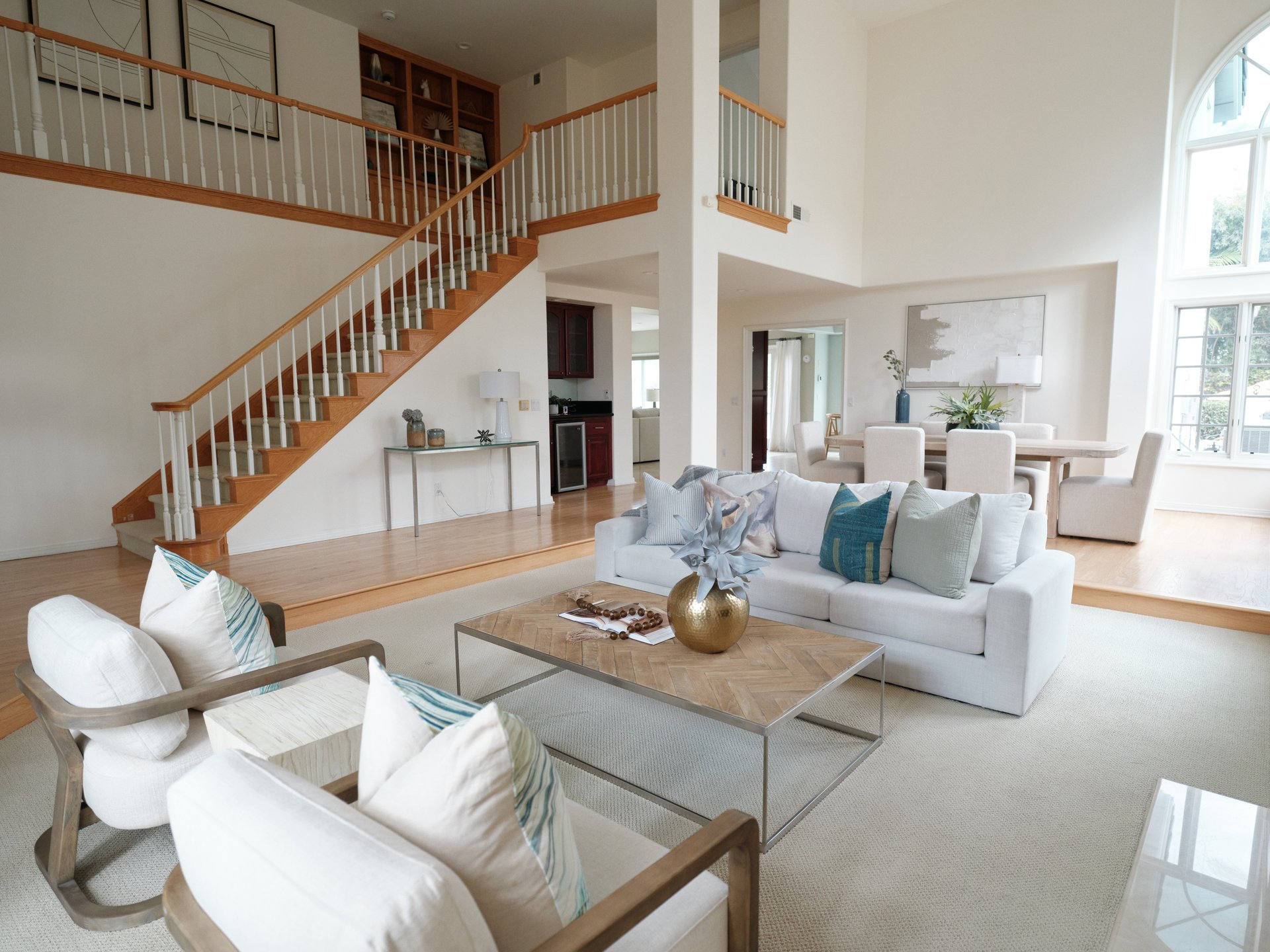
Understanding the cost of living in Anaheim Hills starts with homes like this. Open-concept layouts, natural light, and space all play a role in home pricing.
Housing: The Biggest Line Item by Far
Housing is where Anaheim Hills costs diverge most dramatically from national averages, and it is where most cost of living calculators get it completely wrong because they lump Anaheim Hills in with all of Anaheim.
Here is what the data says right now. The median sale price in Anaheim Hills was $1.1 million as of December 2025 (the most recent closed-sale data from Redfin), representing a 6 percent increase year over year. The median price per square foot is $594, up 2.8 percent from the prior year. Homes are spending an average of 47 to 48 days on the market and receiving an average of three offers per listing. For single-family homes specifically, the median in Anaheim Hills is tracking closer to $1.275 million in early 2026 based on current listing and pending sale data.
Here is what that translates to in actual monthly costs:
A $1.1 million home with 10 percent down at today's rate of 6.09 percent (Freddie Mac, February 12, 2026): Your principal and interest payment is roughly $5,985 per month. Add property taxes ($1,063), homeowner's insurance ($170), and a typical HOA ($150), and you are looking at $7,368 per month. Without an HOA, it drops to about $7,218.
A $650,000 condo or townhome with 5 percent down at 6.09 percent: Principal and interest comes to approximately $3,734 per month, with total monthly costs including taxes, insurance, and HOA running $4,400 to $4,900.
A $1.275 million single-family home with 20 percent down at 6.09 percent: Principal and interest on the $1,020,000 loan is approximately $6,157 per month. Total monthly housing cost with taxes, insurance, and potential HOA: $7,400 to $8,000.
For context, mortgage rates have come down meaningfully. The 30-year fixed averaged 6.87 percent at this time last year. Today's 6.09 percent saves a buyer roughly $500 per month on a $1 million loan compared to where rates were 12 months ago. That is real money.
For renters, Anaheim Hills runs approximately $2,526 per month for a one-bedroom and $3,129 for a two-bedroom according to the most recent apartment data. Those numbers are slightly below the Platinum Triangle district but meaningfully above the citywide Anaheim median of $2,313 for a one-bedroom. Rental inventory in Anaheim Hills is limited because the community is predominantly owner-occupied single-family homes. If you find a single-family home for rent in Anaheim Hills, expect $3,500 to $5,000 per month depending on size and condition.
The bottom line: housing will consume 35 to 50 percent of a typical household's gross income in Anaheim Hills. That is the reality of living in a premium Orange County community with top-rated schools and hillside views.
Property Taxes: The Details That Matter
California's Proposition 13 caps the base property tax rate at 1 percent of assessed value statewide, with annual assessment increases limited to 2 percent per year unless the property changes ownership. Long-term homeowners in Anaheim Hills often pay taxes based on assessed values far below current market value, which is a significant financial advantage.
For new buyers, the purchase price becomes the new assessed value. The effective property tax rate in Anaheim comes to approximately 1.16 percent when you include the base rate plus voter-approved bond assessments for schools, parks, and infrastructure. For an Anaheim Hills home specifically, special district assessments typically add $1,400 to $2,200 per year on top of the 1 percent base.
Here is the practical math:
On a $1.1 million purchase: approximately $12,760 per year, or $1,063 per month. On a $650,000 condo: approximately $7,540 per year, or $628 per month. On a $1.275 million home: approximately $14,790 per year, or $1,233 per month.
The Mello-Roos factor. This is where I save my clients money that they did not know they were about to spend. Some Anaheim Hills neighborhoods — particularly communities built in the late 1980s through early 2000s in the eastern portion of the community — carry Mello-Roos special tax assessments. Mello-Roos is an additional tax used to finance the infrastructure (roads, sewers, schools, parks) that was needed when those neighborhoods were originally developed. It appears as a separate line item on your property tax bill, and it can add $2,000 to $5,000 per year depending on the specific community and the remaining bond term. I check every property I show for Mello-Roos assessments because most online listing sites do not highlight this cost, and it directly impacts your monthly payment.
Property tax bills in Anaheim are due in two installments. First installment: due November 1, delinquent after December 10. Second installment: due February 1, delinquent after April 10. Late payments trigger a 10 percent penalty.
Every homeowner who occupies their property as a primary residence should file for the $7,000 homeowner's exemption. It only saves about $70 to $100 per year, but it is a one-time filing that lasts as long as you own the home.
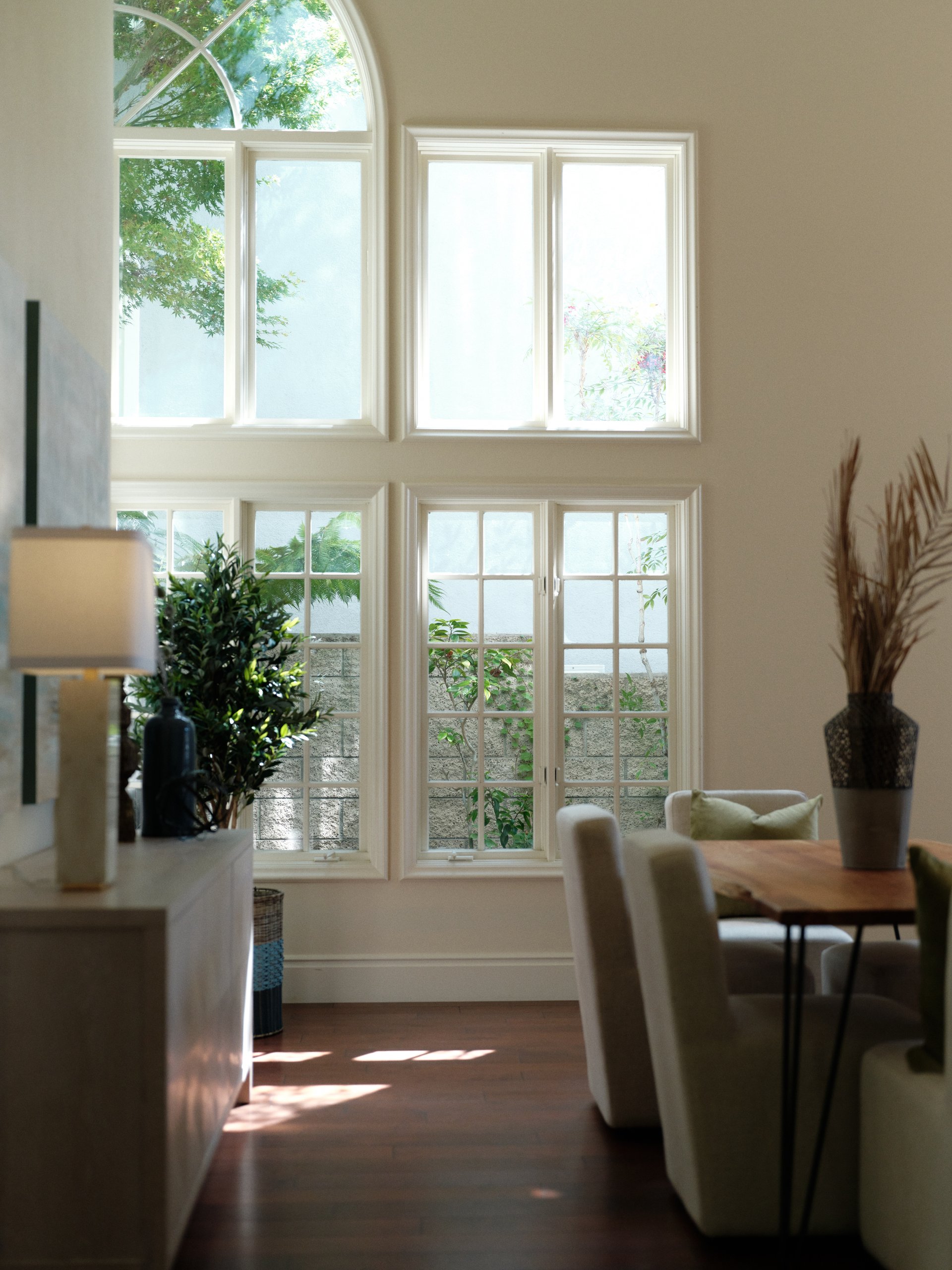
Spaces filled with natural light can make a big difference. Bright dining areas like this help homes feel more open, warm, and livable to today’s buyers.
Utilities: Anaheim Hills Has a Built-In Advantage Most People Miss
This is one of the genuine cost advantages of living in Anaheim Hills that most people — including many real estate agents — do not talk about. Anaheim has its own municipal utility company, Anaheim Public Utilities, which provides both electricity and water. Because it is a city-owned, not-for-profit utility, residential electricity rates are dramatically lower than what Southern California Edison charges in surrounding cities.
The numbers tell the story. Anaheim Public Utilities charges residential customers approximately 19.87 cents per kilowatt hour. Southern California Edison — which serves Yorba Linda, Villa Park, North Tustin, Orange, and most of the surrounding communities — regularly exceeds 30 cents per kilowatt hour. That is a 35 percent discount on your electric bill every single month just because of where your property sits.
Here is a realistic monthly utility breakdown for a 2,200 to 3,000 square foot single-family home in Anaheim Hills:
Electricity (Anaheim Public Utilities): $130 to $280 per month depending on season. Larger hillside homes with multiple HVAC zones can push toward $300 in July through September when you are running air conditioning against triple-digit canyon heat. Winter months drop to $100 to $150. The citywide average Anaheim residential electric bill is roughly $95 per month, but that includes apartments and smaller units. A typical single-family home in Anaheim Hills runs higher because of the square footage and the summer heat load.
Water (Anaheim Public Utilities): $80 to $150 per month. Anaheim bills most residential customers bimonthly (every 60 days). Larger lots with lawn and landscaping drive water costs higher. Drought-conscious homeowners with drip irrigation and drought-tolerant landscaping can keep this under $100.
Natural gas (SoCalGas): $40 to $100 per month. Heating costs are modest — Anaheim Hills winters are mild — but gas water heaters, stoves, and dryers contribute to the baseline.
Internet: $50 to $100 per month. Spectrum and AT&T Fiber are the most common providers.
Trash and sewer: Included in your Anaheim utility billing. The city provides residential trash collection.
Total estimated monthly utilities for a single-family home: $350 to $550, with seasonal variation. Here is the comparison that matters: a homeowner in Yorba Linda, Villa Park, or North Tustin with the same size home will pay $150 to $250 more per month in electricity alone because they are on Southern California Edison's rate schedule. Over a 10-year homeownership period, that utility savings in Anaheim Hills adds up to $18,000 to $30,000. That is a real, quantifiable financial advantage of living on the Anaheim side of the border.
Groceries, Gas, and Everyday Spending: What Things Actually Cost
This is where I want to get specific, because vague national averages help nobody.
Groceries. The Bureau of Labor Statistics reports that food prices in the Los Angeles-Long Beach-Anaheim metro area rose 3.1 percent year over year as of January 2026, with grocery store prices specifically jumping 1.4 percent in January alone. Anaheim Hills is well served by grocery stores along Santa Ana Canyon Road and Nohl Ranch Road — Vons, Ralphs, Trader Joe's, Albertsons — with Whole Foods and several Korean and Asian markets within a short drive.
Here are real prices you will encounter: a gallon of whole milk runs approximately $5.02. A dozen eggs are around $3.35 (though egg prices have been volatile nationally — they spiked in early 2025 and have since pulled back roughly 30 percent). A pound of potatoes is about $4.52. A loaf of bread runs $4.50 to $5.50 depending on brand. Ground beef is approximately $6.50 to $7.50 per pound, reflecting a national increase of roughly 15 percent over the past year.
Realistic monthly grocery estimates: a single adult should budget $400 to $550. A couple, $750 to $1,000. A family of four, $1,100 to $1,500. Those numbers are roughly 8 to 10 percent above national averages, consistent with the broader Orange County grocery premium.
Gas. This week, regular unleaded at stations in the 92808 zip code (Anaheim Hills) ranges from $4.60 to $4.89 per gallon. The Chevron on Santa Ana Canyon Road is at $4.79. The Costco in Yorba Linda (a popular fill-up spot for Anaheim Hills residents) tends to run $0.30 to $0.50 cheaper per gallon. If you drive a mid-size SUV and commute 25 miles each way, budget $250 to $350 per month for gas.
Dining out. Anaheim Hills does not have a walkable restaurant district like downtown Brea or Old Towne Orange, but there are solid options along Santa Ana Canyon Road, plus nearby Yorba Linda and The Outlets at Orange. A casual sit-down dinner for two runs $60 to $90 before tip. A fast-casual lunch is $16 to $24 per person. Coffee at a local shop is $5.50 to $7.50.
Sales tax. The rate in Anaheim is 8.75 percent as of 2025, which includes the state base rate of 7.25 percent plus 1.5 percent in local assessments approved under Measure J. Groceries (unprepared food) are exempt from sales tax in California, but prepared food, restaurant meals, and most retail purchases are subject to the full rate.
Transportation: Toll Roads, Commute Times, and Real Costs
Anaheim Hills is a car-dependent community. OCTA bus routes serve Santa Ana Canyon Road, but the practical reality is that you need a car. The neighborhoods are built into the hills, commercial areas are spread out, and daily life revolves around driving.
Commute times and routes. Anaheim Hills sits at the intersection of the 91, 55, and 241 freeways. Here are realistic commute times during weekday rush hour:
To Irvine (Spectrum/business district): 25 to 45 minutes via the 241 or 55 south. To downtown Los Angeles: 50 to 80 minutes via the 91 west to the 57 north. To Riverside: 30 to 50 minutes via the 91 east. To Newport Beach: 30 to 45 minutes via the 55 south. To Ontario/Inland Empire: 35 to 55 minutes via the 91 east.
The 91 freeway westbound in the morning and eastbound in the evening is the congestion chokepoint every Anaheim Hills resident knows. This is where the toll roads become a real budget consideration.
Toll road costs (as of July 2025 rate schedule, effective through 2026). The 241 Toll Road runs from the SR-91 interchange near Anaheim Hills south through Irvine to Rancho Santa Margarita. It has two mainline toll gantries. The Windy Ridge gantry (near the 91) charges up to $4.67 per trip. The Tomato Springs gantry (near the 133 interchange in Irvine) charges up to $4.46 per trip. FasTrak account holders pay variable rates based on time of day, but without FasTrak, you pay the maximum.
A full one-way trip from Anaheim Hills to central Irvine via the 241/261 runs approximately $7 to $9 with FasTrak during peak hours, or up to $12+ without an account. Round trip: $14 to $20 per day. If you commute this route daily, five days a week, you are looking at $280 to $400 per month just in tolls — on top of gas. Over a year, that is $3,360 to $4,800 in toll costs alone.
This is a real line item that most cost of living articles completely ignore, but it is a significant factor for Anaheim Hills residents who work in Irvine, Mission Viejo, or south Orange County.
Car insurance. Full coverage auto insurance in Anaheim Hills typically runs $140 to $230 per month. The area tends toward the lower end of the Orange County range because of lower traffic density and crime rates compared to central Anaheim or Santa Ana.
Total estimated monthly transportation — single driver: $550 to $900 (including car payment, insurance, gas, maintenance, and tolls if applicable). Two-car household: $1,000 to $1,600.
Schools: The Reason Families Pay the Premium
School quality is the single biggest driver of family home purchases in Anaheim Hills, and the numbers back it up.
Anaheim Hills is served by the Orange Unified School District. Canyon High School is the community's flagship high school — a Gold Ribbon School and International Baccalaureate program that ranks in the top 30 percent of all California high schools. The data is strong: 61 percent of 11th graders test proficient or better in English language arts (versus the statewide average of 47 percent) and 48 percent in math (versus the state average of 34 percent). The school serves approximately 2,178 students with access to AP courses, IB curriculum, career technical education pathways, and competitive athletics.
El Rancho Charter Middle School consistently ranks among the top middle schools in the district. On the elementary level, Anaheim Hills is home to multiple Blue Ribbon and California Distinguished Schools, including Anaheim Hills Elementary, Canyon Rim Elementary, Running Springs Academy, Crescent Elementary, and Imperial Elementary.
Public school is tuition-free, but there are real indirect costs: activity fees, sports participation, school supplies, technology requirements, and field trips typically add $500 to $1,500 per child per year depending on grade and involvement level.
Private school options: Fairmont Preparatory Academy (a well-regarded option near Anaheim Hills, Niche rating A+), Servite High School, and Cornelia Connelly School are the most popular choices. Private school tuition in Orange County runs $12,000 to $32,000 per year.
Childcare and preschool. Full-time daycare in the Anaheim and Orange County area runs approximately $1,200 to $2,200 per month for infants and toddlers, with center-based preschool programs for ages 3 to 5 costing $900 to $1,600 per month. Licensed in-home daycare providers are more affordable at $800 to $1,400 per month. For context, the average monthly daycare cost in the city of Orange (adjacent to Anaheim Hills) is approximately $1,404 per month for full-time care.

Thriving school environments play a key role in neighborhood appeal. Communities with engaged students and families continue to hold strong value.
Healthcare
Orange County has excellent healthcare infrastructure. From Anaheim Hills, you are within 15 to 25 minutes of Kaiser Permanente Anaheim, St. Joseph Hospital Orange, CHOC Children's Hospital, and UCI Medical Center. Regional data shows healthcare costs in the Anaheim area run roughly 5 percent below the national average — one of the few categories where this area is actually more affordable.
Typical costs: a primary care office visit averages $150 to $200 without insurance. A dental cleaning runs $100 to $150. An optometry exam is approximately $157. Health insurance premiums for an employer-sponsored family plan average $500 to $700 per month (employee share) in California, while individual marketplace plans through Covered California run $400 to $700 per month before subsidies.
Total healthcare budget for a family: $500 to $1,200 per month including premiums, copays, prescriptions, and dental.
HOA Fees: The Hidden Variable
Generic cost of living calculators do not account for HOA fees, but in Anaheim Hills — with more than 40 distinct homeowners' associations — they are a significant budget line for most homeowners.
Condo and townhome communities: $250 to $450 per month. These fees cover exterior maintenance, building insurance, common area landscaping, community pool, and sometimes water.
Single-family HOA neighborhoods: $50 to $200 per month. Common area maintenance, neighborhood landscaping, community amenities. Many older single-family neighborhoods in western Anaheim Hills (Westridge, Anaheim Hills Estates) have no HOA.
Guard-gated communities (Summit Pointe, Belsomet, Hidden Canyon): $200 to $500 per month, including 24-hour security guard service, gate maintenance, and enhanced amenities.
A $350 per month HOA fee adds $42,000 to your cost of homeownership over a 10-year hold. For anyone evaluating Anaheim Hills investment properties, that HOA cost directly reduces your cash flow and return on investment. Lenders count HOA fees against your debt-to-income ratio when qualifying you for a mortgage, which directly reduces the purchase price you can afford. I always run the full monthly cost — mortgage, taxes, insurance, and HOA — before showing clients homes, because the sticker price on the listing is never the full story.
The Full Monthly Budget: Real Numbers for Two Scenarios
Here is where I put all of these numbers together into honest monthly budgets. These are based on actual costs as of February 2026.
Monthly Budget — Renter (Two-Bedroom Apartment, Couple, No Children)
Rent: $3,129. Utilities (electric, gas, internet): $200 to $250. Groceries: $750 to $1,000. Transportation (one car, no tolls): $550 to $700. Health insurance and healthcare: $500 to $800. Renter's insurance: $25 to $40. Dining out and entertainment: $300 to $500. Miscellaneous: $200 to $400.
Estimated total: $5,654 to $6,819 per month, or roughly $68,000 to $82,000 per year.
Monthly Budget — Homeowner (Median $1.1 Million Home, 10% Down, Family of Four)
Mortgage (P&I at 6.09%): $5,985. Property taxes: $1,063. Homeowner's insurance: $170. HOA (if applicable): $0 to $350. Utilities: $350 to $550. Groceries: $1,100 to $1,500. Transportation (two cars, some toll use): $1,100 to $1,600. Healthcare: $700 to $1,200. Childcare (if applicable, one child): $1,200 to $2,000. Home maintenance reserve (1% of home value annually): $917. Dining out and entertainment: $400 to $600. Miscellaneous: $300 to $500.
Estimated total with childcare: $13,285 to $16,435 per month, or $159,400 to $197,200 per year.
Estimated total without childcare: $12,085 to $14,435 per month, or $145,000 to $173,200 per year.
A couple without children buying at the median price should budget approximately $11,000 to $13,000 per month all-in.
These are real numbers. I run these calculations with my buyer clients regularly, and these estimates are consistent with what families in Anaheim Hills actually spend. The households that live here comfortably typically have combined incomes of $180,000 or more, with many in the $200,000 to $350,000 range.
How Anaheim Hills Compares to Nearby Communities
Evaluating the cost of living in Anaheim Hills requires understanding what you get relative to the alternatives. Here is the honest comparison.
Anaheim Hills versus Yorba Linda. Yorba Linda's median sale price is $1.3 million — roughly $200,000 higher than Anaheim Hills. Yorba Linda offers larger average lot sizes, equestrian zoning in parts of the community, and the Placentia-Yorba Linda Unified School District, which consistently ranks among OC's best. The major cost difference most people miss: Yorba Linda is served by Southern California Edison, not Anaheim Public Utilities. A Yorba Linda homeowner with the same size house will pay $1,800 to $3,000 more per year in electricity alone. For families who want top schools and lot size and can absorb the premium, Yorba Linda is the step up. For families who want comparable quality of life at a lower entry point with genuinely cheaper utilities, Anaheim Hills is the stronger value proposition.
Anaheim Hills versus Brea. Brea's median is approximately $1.1 million, putting it in the same price tier. The lifestyle difference is the key: Brea has a walkable downtown along Birch Street with restaurants, entertainment, and nightlife. Anaheim Hills is more nature-oriented — canyon trails, hillside views, Oak Canyon Nature Center, Yorba Regional Park. Brea is served by the Brea Olinda Unified School District. Both are strong communities that attract slightly different buyer profiles.
Anaheim Hills versus Villa Park. Villa Park is the smallest city in Orange County — roughly 5,700 residents, entirely single-family residential, no apartments or condos, minimum lot sizes of 8,000 to 20,000 square feet. Median home values exceed $1.5 million. If you want maximum space and privacy and can afford the entry point, Villa Park is its own category.
Anaheim Hills versus North Tustin. North Tustin is unincorporated — no city HOAs, no Mello-Roos, and larger lots with older character homes. Prices are comparable to or slightly above Anaheim Hills. North Tustin feeds into the Tustin Unified School District. Both communities offer excellent quality of life. The choice often comes down to whether you prefer the master-planned hillside feel of Anaheim Hills or the more organic, established-neighborhood character of North Tustin.

Personalized spaces like this are what today’s buyers are looking for. Homes that feel warm and lived-in are getting attention fast.
Is Anaheim Hills Expensive? The Honest Answer
Yes, compared to the national average. Housing costs in the Anaheim area run approximately 168 percent above the national average, and the overall cost of living is roughly 50 to 65 percent higher than the United States as a whole.
Compared to California, Anaheim Hills is roughly in line with or slightly above the state average.
Compared to other desirable Orange County communities with strong schools, hillside settings, and low crime, Anaheim Hills is one of the more accessible entry points. You will pay less here than in Yorba Linda, Villa Park, North Tustin, or any of the coastal cities.
The question I tell my clients to ask is not "is Anaheim Hills expensive" — it is. The question is: does the cost of living here deliver value for what matters to you? If you prioritize top-rated public schools (six Blue Ribbon elementary schools, IB program at Canyon High), safe neighborhoods, access to over 50 miles of trails and canyon parks, significantly lower utility bills than your neighbors, and a community that has maintained its character for four decades, then Anaheim Hills offers that package at a price point that is competitive within the Orange County market.
Frequently Asked Questions About the Cost of Living in Anaheim Hills
What salary do you need to live in Anaheim Hills?
A rough guideline is that you should earn at least three times your monthly housing cost. For a renter in a two-bedroom apartment at $3,129 per month, that means a household income of at least $112,000 per year. For a homeowner at the median price with a total monthly housing cost of $7,200 to $8,500, you need a combined household income of approximately $260,000 to $306,000 per year to keep housing within the recommended 30 percent of gross income. Most families I work with in Anaheim Hills have household incomes in the $180,000 to $350,000 range.
Is Anaheim Hills cheaper than Irvine?
Generally yes for comparable single-family homes. Irvine's median home price runs higher, and Irvine's rental market is also more expensive on average. Utilities in Anaheim Hills are meaningfully cheaper because of Anaheim Public Utilities. The trade-off is that Irvine has newer housing stock, more walkable town center areas, and the Irvine Unified School District. Overall monthly costs are comparable, but the lifestyle and housing character are different.
Are there affordable areas within Anaheim Hills?
Yes. The western neighborhoods of Westridge and Anaheim Hills Estates have the most affordable detached homes, typically in the $800,000 to $1.1 million range. Condos and townhomes near Santa Ana Canyon Road and in the Summit area start in the mid $500,000s to $650,000s. These are the best entry points for first-time buyers.
Does Anaheim Hills have Mello-Roos?
Some neighborhoods do, particularly those built in the late 1980s through early 2000s in the eastern portion of the community. Mello-Roos adds $2,000 to $5,000 per year to your property tax bill. I check every property for Mello-Roos assessments because it directly affects your monthly cost.
What are HOA fees in Anaheim Hills?
They range from $0 (older single-family neighborhoods without an HOA) to $500 per month (guard-gated communities). Condos and townhomes typically run $250 to $450 per month. Single-family HOA communities run $50 to $200 per month.
How much are utilities in Anaheim Hills?
A typical single-family home runs $350 to $550 per month total for electricity, water, gas, and internet. The electricity portion is significantly lower than neighboring cities because Anaheim has its own municipal utility with rates roughly 35 percent below Southern California Edison.
Is it cheaper to live in Anaheim Hills or Riverside?
Significantly cheaper in Riverside. Median home prices are roughly 40 to 50 percent lower, and overall cost of living is approximately 15 to 20 percent less. The trade-offs are commute time (45 to 75 minutes to most Orange County employment centers), school quality, and lifestyle. Many families I work with have moved from Riverside to Anaheim Hills specifically for the schools and the shorter commute.
Ready to Run the Numbers for Your Situation?
Every household budget is different. A single professional buying a condo in the Summit area has a completely different cost profile than a family of five looking at a four-bedroom home in the Canyon neighborhoods. The numbers in this guide give you a framework, but the real budget comes together when you get specific about your price range, your financing, your neighborhood preferences, and the costs that apply to your life.
As both a real estate broker and a mortgage broker, I help buyers put together these numbers every week — not just the purchase price, but the total monthly cost of ownership including taxes, insurance, HOA, utilities, and the financing structure that makes the most sense for their situation. If you are ready to search for homes in Anaheim Hills, thinking about selling your current home, or just trying to figure out whether your budget works in this community, I would be happy to walk through the real costs with you.
No pressure, no sales pitch — just an honest conversation with someone who has been doing this here for over 20 years. Get in touch anytime.
Brian Kidd — Canyon Realty CA DRE# 01901810 Phone: (714) 404-8152 Email: [email protected] Website: www.canyonrealty.com