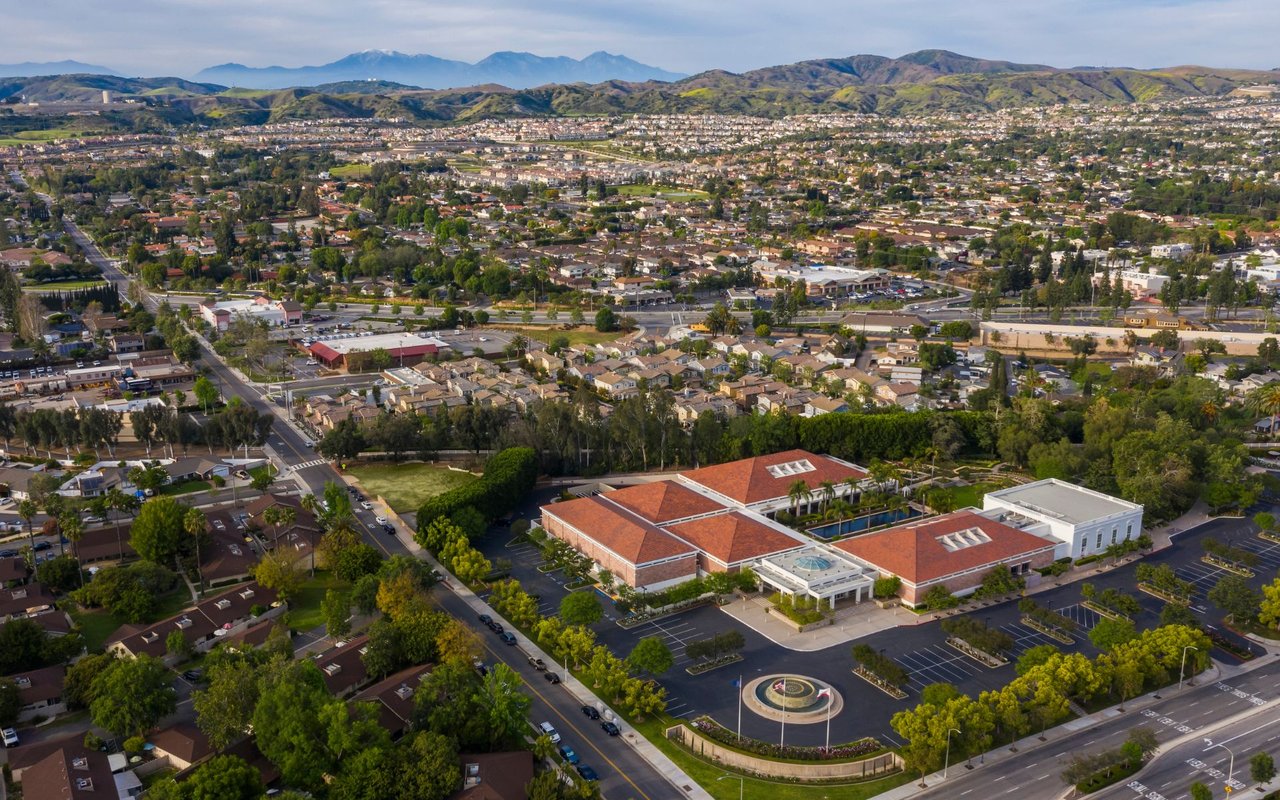
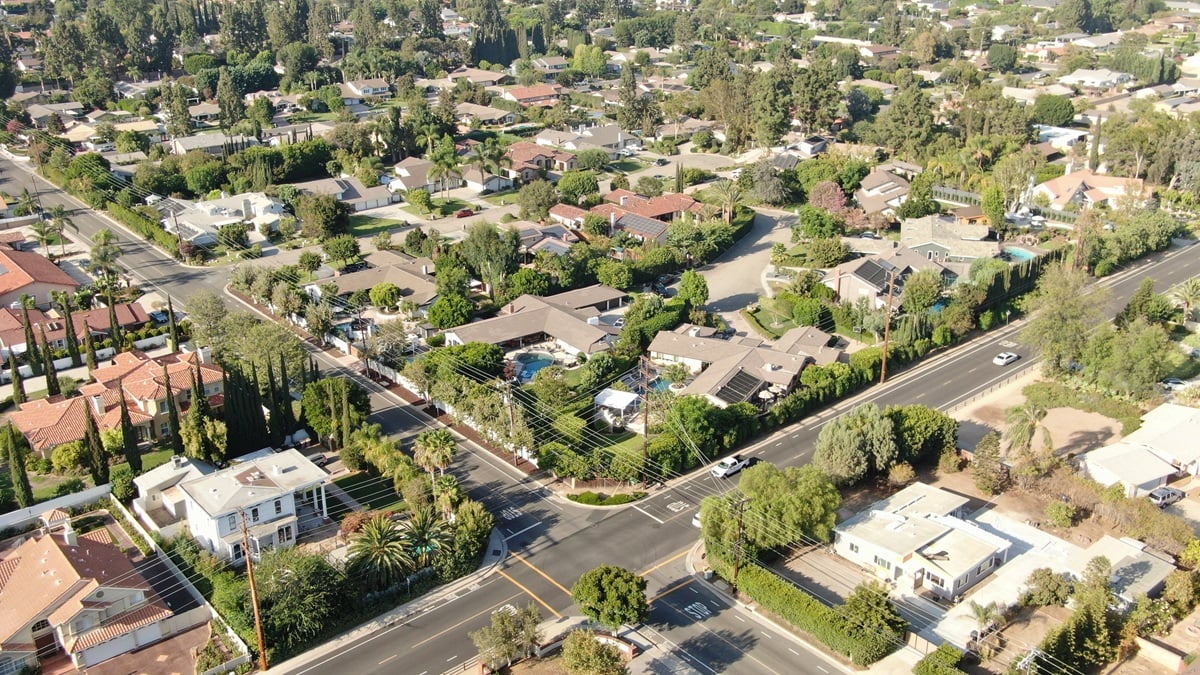
Villa Park’s large lots and low-density zoning are what drive long-term value here. Understanding how that impacts pricing is key to making the right decision in this market.
What Makes Villa Park Different from Every Other City in Orange County
I have spent over two decades selling real estate across east Orange County, and Villa Park is the market I always have to explain to people who are not from the area. It is not like Yorba Linda. It is not like Anaheim Hills. It is not like Orange. Villa Park is something else entirely, and the numbers in 2026 reflect that uniqueness in ways that buyers and sellers need to understand before making any decisions. As a Villa Park real estate agent who has worked this market for over two decades, I see the patterns here that do not show up in county-wide averages.
Villa Park is the smallest city by population in all of Orange County. Roughly 5,843 people live here across just 2.1 square miles, according to the 2020 U.S. Census. The median household income sits at $204,750, and the per capita income is $92,434. Those numbers alone tell you something about who lives here, but the real story is in the zoning. The City of Villa Park maintains a minimum net lot area of 20,000 square feet throughout most of the city, which means half-acre parcels are the norm, not the exception. There are no condominiums. There are no apartment buildings. With the exception of one small shopping center known as the Town Center, there is no commercial zoning within city limits. Every home is a single-family residence. That is why locals and real estate professionals have always called Villa Park "The Hidden Jewel" of Orange County.
I grew up in Yorba Linda and have spent more than 40 years in east Orange County. I have watched Villa Park evolve from a community of mid-century ranch homes on sprawling citrus lots into one of the most exclusive residential enclaves in Southern California. The character of the city has not changed, even as the homes themselves have been transformed. Many of the original ranch-style properties have been extensively remodeled or replaced entirely with large custom estates, and that trend continues today. What has not changed is the sense of privacy, space, and quiet that draws families here in the first place.
Villa Park Home Prices in 2026: The Numbers You Need
Let me lay out the current data so you can see exactly where the market stands heading into spring 2026.
The average Villa Park home value is approximately $2,040,233 according to the Zillow Home Value Index, reflecting a modest decline of 1.7% over the past year. However, that single number does not tell the full story. The median sale price reported by Redfin for December 2025 was $2.6 million, representing a 26.8% increase compared to the same period one year earlier. The median sale price per square foot came in at $725, up 4.9% year over year.
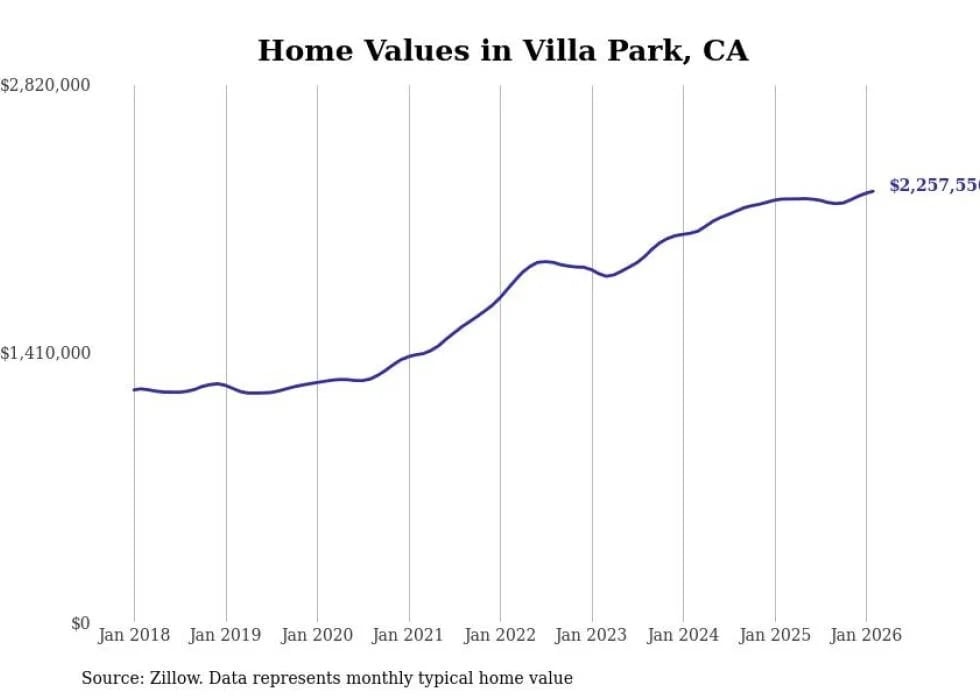
Villa Park home prices have climbed steadily over the past several years, but recent data shows a shift. Pricing strategy matters more than ever in today’s market.
As of mid-March 2026, active listings in Villa Park show a median list price between $3.24 million and $3.30 million, with average price per square foot hovering between $737 and $740. There are currently only 8 to 9 homes actively listed for sale in the entire city. That inventory number is critical context. In a city with fewer than 2,000 total housing units, single-digit active inventory is not unusual, but it shapes every negotiation and every pricing decision in ways that larger markets simply do not experience.
The median sale price for homes in Villa Park over the trailing 12 months is approximately $2,435,444, representing an 11% increase from the prior 12-month period according to Homes.com data. On average, homes are selling after about 55 days on the market, which is roughly in line with the national average of 54 days. That said, recent RealKey.ai data through March 2, 2026 paints a more nuanced picture, showing a median days-to-close figure of 206 days, with 75% of closed sales occurring below asking price and 0% closing above list price. For sellers, that last statistic is the one that should command your attention. Overpricing in Villa Park right now carries real consequences.
Recent Sales: What Actually Sold and for How Much
The best way to understand any market is to look at what real buyers actually paid for real properties. Here are the most recent closed transactions in Villa Park heading into 2026.
A five-bedroom, four-bathroom home at 9631 Fleet Road sold on January 16, 2026 for $2,950,000. The property offered 4,067 square feet of living space, was originally listed at $2,999,888, and ultimately closed at 2% below asking after 72 days on the market. On January 12, 2026, a four-bedroom home with three and a half bathrooms at 18471 Hillcrest sold for $2,275,000. That property had 3,918 square feet, was listed at $2,395,000, and closed 5% under list price after 74 days.
One of the more notable recent sales was 18732 Monte Vista Circle, a four-bedroom, four-bathroom estate with 4,479 square feet. It closed on January 5, 2026 for $3,350,000 after sitting on the market for 174 days. The original asking price was $3,550,000, and the final sale came in 6% below that number. That extended time on market and the discount from list price are both signals that sellers in the upper tier of Villa Park's market need to price with precision from the start.
On the other end, 18746 Patrician Drive sold on December 31, 2025 for $2,600,000, which was actually 4% above its $2,500,000 list price. That property closed in just 49 days. Patrician Drive is known locally as one of the most prestigious streets in Villa Park, and the above-asking result there is not surprising to anyone who understands the premium that specific streets command in this community. Meanwhile, 17822 Aberdeen Lane closed on December 23, 2025 for $1,650,000 after 118 days on market. At $1,695,000 asking, the 3% discount and the extended days on market reflect the challenges that smaller, less updated homes face even in a desirable city like Villa Park.
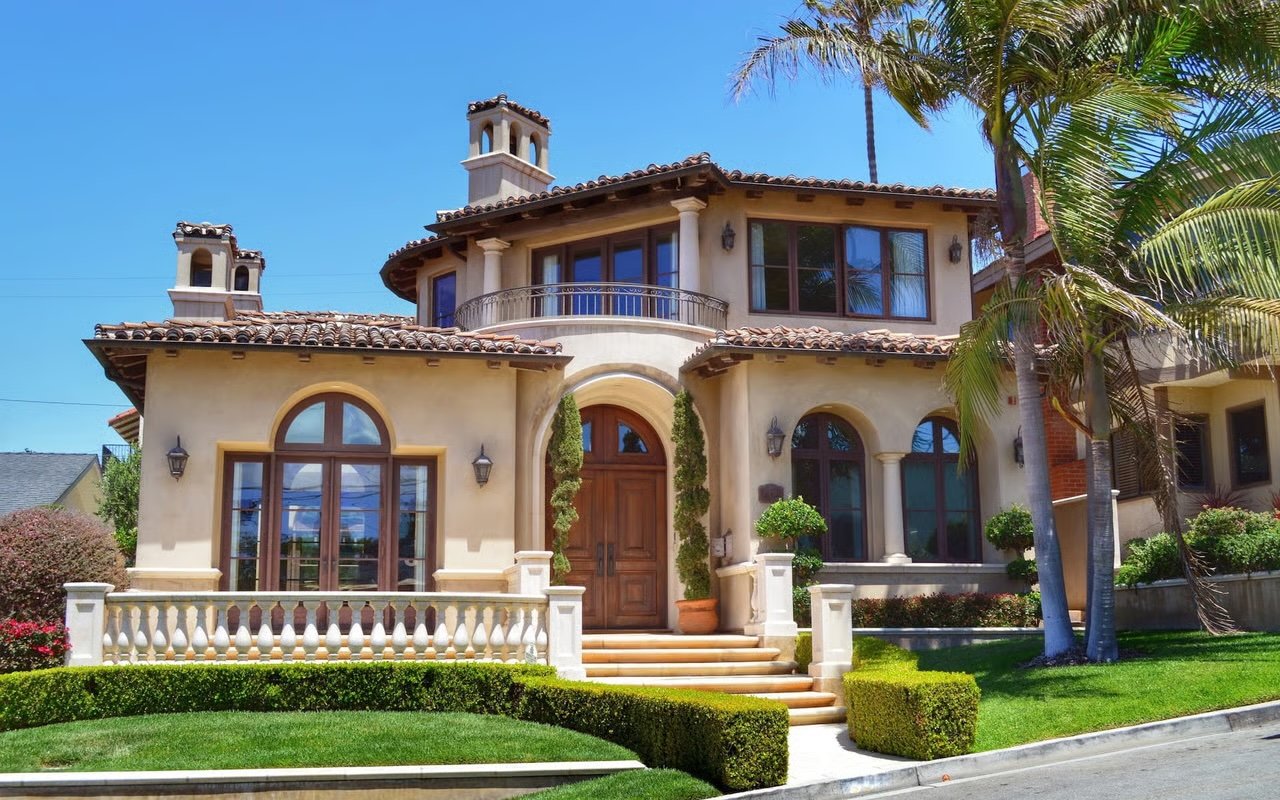
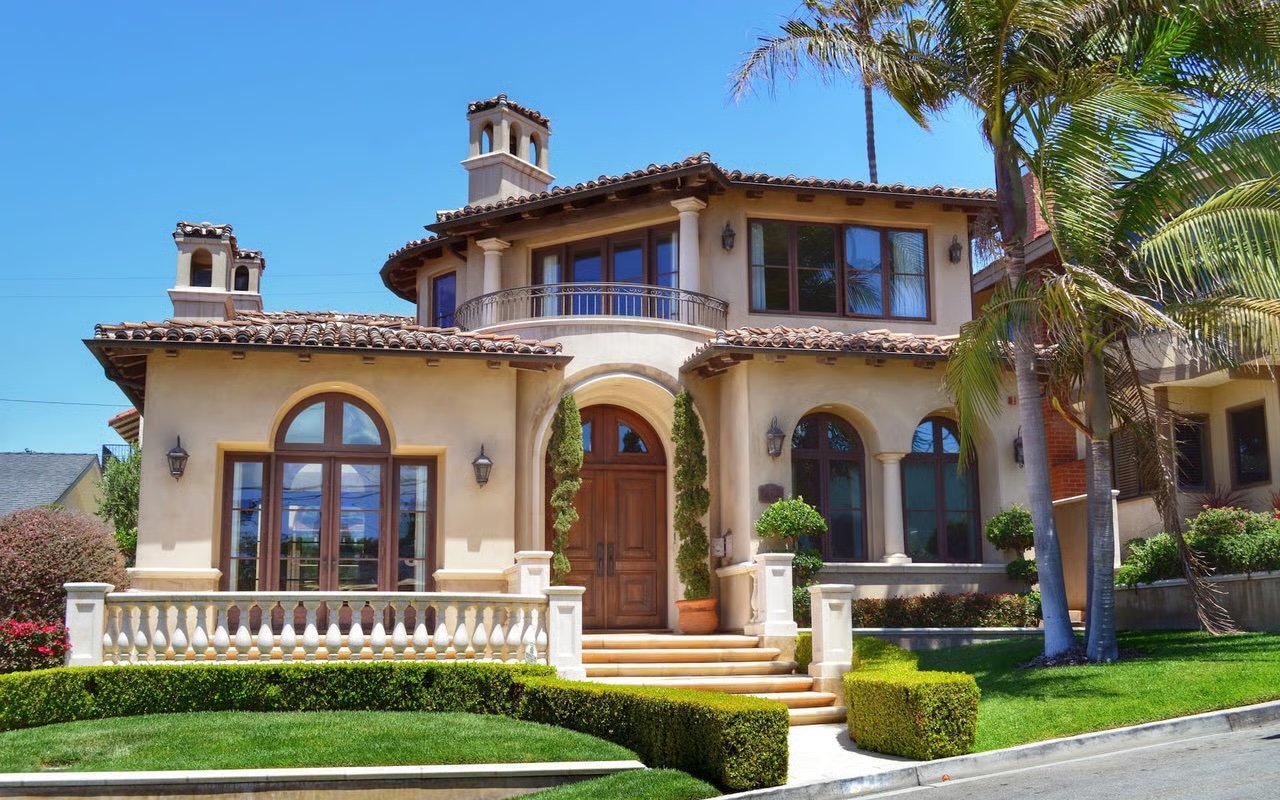
In Villa Park, luxury homes like this are limited and highly price-sensitive. In today’s market, pricing correctly from the start determines whether a home sells or sits.
These recent transactions tell a clear story. Well-priced homes on premium streets are still moving. Overpriced properties, even in one of the most exclusive zip codes in Orange County, are sitting. If you are considering selling your home, the preparation and pricing strategy you choose will determine whether your experience looks like Patrician Drive or Aberdeen Lane.
Mortgage Rates in March 2026 and What They Mean for Villa Park Buyers
Mortgage rates are a significant factor in any market, but they carry extra weight in Villa Park where the median purchase price exceeds $2 million. As of March 19, 2026, Freddie Mac's Primary Mortgage Market Survey reported the 30-year fixed-rate mortgage averaging 6.22%, up from 6.11% the previous week. By March 23, 2026, Bankrate data showed the average 30-year fixed rate at 6.36%.
For context, the 30-year fixed rate was averaging 6.67% at this same time last year, so buyers today are seeing roughly 30 to 45 basis points of improvement. The Federal Reserve held its benchmark rate steady at 3.50% to 3.75% at its most recent meeting on March 18, 2026. Rising energy prices connected to geopolitical tensions and ongoing concerns about inflation have put upward pressure on the 10-year Treasury yield, which in turn has pushed mortgage rates higher in recent weeks despite the Fed's unchanged stance.
What does this mean in practical terms for a Villa Park purchase? On a $2 million home with 20% down, a $1.6 million mortgage at 6.22% produces a monthly principal and interest payment of approximately $9,841. At last year's average rate of 6.67%, that same loan would have cost approximately $10,277 per month. The rate improvement translates to roughly $436 per month or $5,232 per year in savings. On a jumbo loan of this size, even small rate movements have real dollar impacts, and buyers at the Villa Park price point should be working with a broker who understands both the lending and real estate sides of the transaction.
The 30-year fixed rate averaged 6.18% for the first two months of 2026, and Bankrate projects the full-year average will land around 6.1%, with rates potentially dropping as low as 5.7% or rising as high as 6.5% depending on inflation data and Federal Reserve policy decisions throughout the year. For homeowners who locked in rates above 7% in 2023 or 2024, a refinance may become increasingly attractive if rates dip below 6%. I walk clients through these calculations regularly because the decision to buy, sell, or refinance in Villa Park often involves a seven-figure mortgage, and the math has to work. If you want to understand your specific numbers, I encourage you to connect with me directly so we can run the analysis for your situation.
Why Villa Park's Zoning Makes It Unlike Anywhere Else
I touched on this earlier, but the zoning story in Villa Park deserves deeper exploration because it is the single most important factor driving long-term property values here. The city's development standards were adopted shortly after Villa Park incorporated on January 11, 1962, and they have remained remarkably consistent in the decades since.
The 20,000 square foot minimum lot size throughout most of the city means that a typical Villa Park property sits on roughly half an acre. Some lots are considerably larger. While some parcels can be as small as 8,000 square feet or roughly 3 units per acre, the overwhelming majority of homes occupy half-acre parcels or more. This is not a gated community or a master-planned development. It is an entire city that was designed, zoned, and maintained to preserve a low-density residential character that is almost impossible to find anywhere else in metropolitan Orange County.
The absence of commercial zoning (aside from the single Town Center) means there is no commercial tax base. All city services are funded directly by residents through property taxes and fees. This structure reflects a community that has always prioritized self-governance and local control over the kind of growth-oriented development that transformed neighboring cities like Orange and Anaheim. Many areas of Villa Park lack sidewalks, which might seem unusual to someone relocating from a more suburban environment, but it is an intentional design choice that reinforces the semi-rural character of the streets.
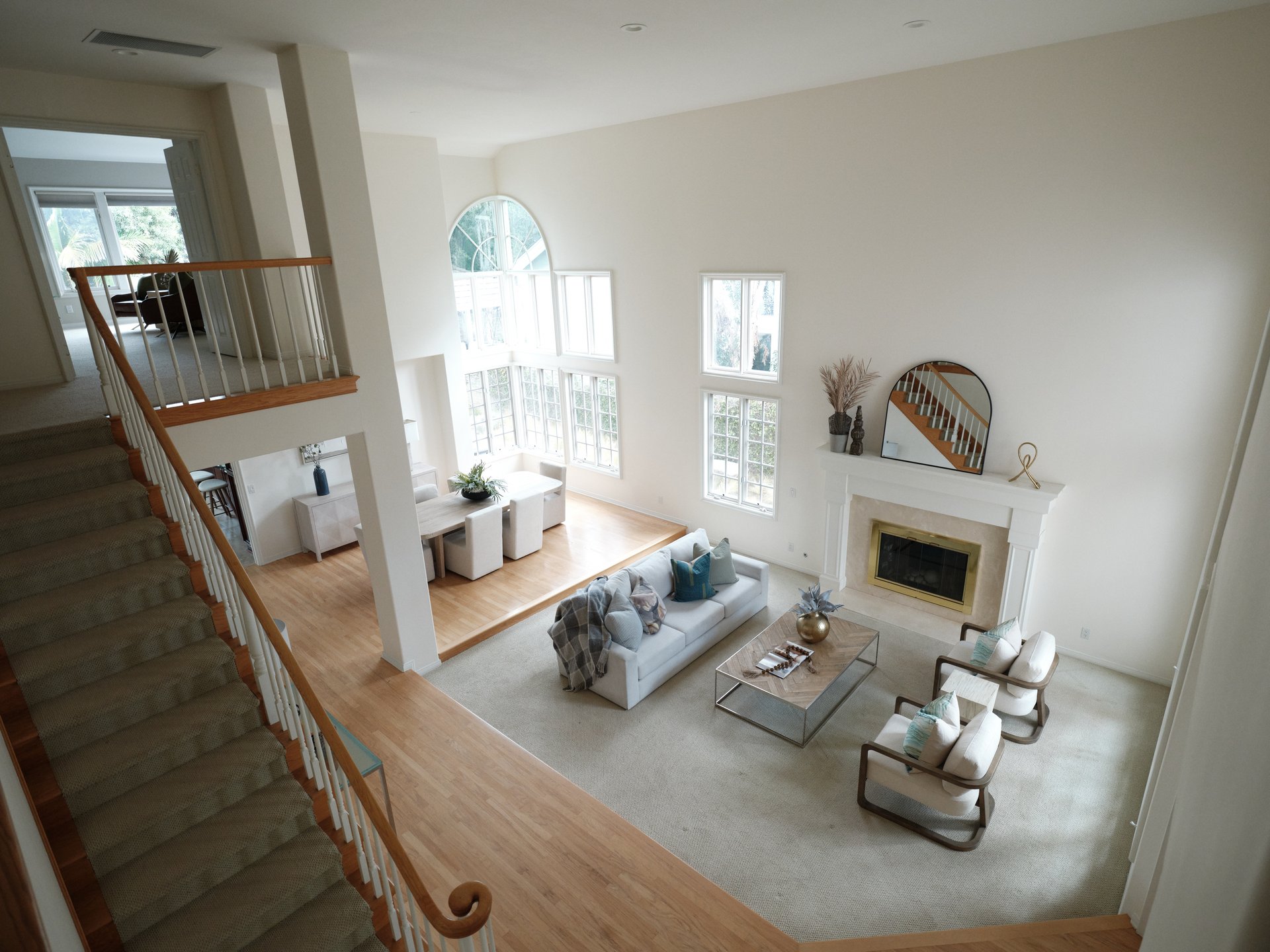
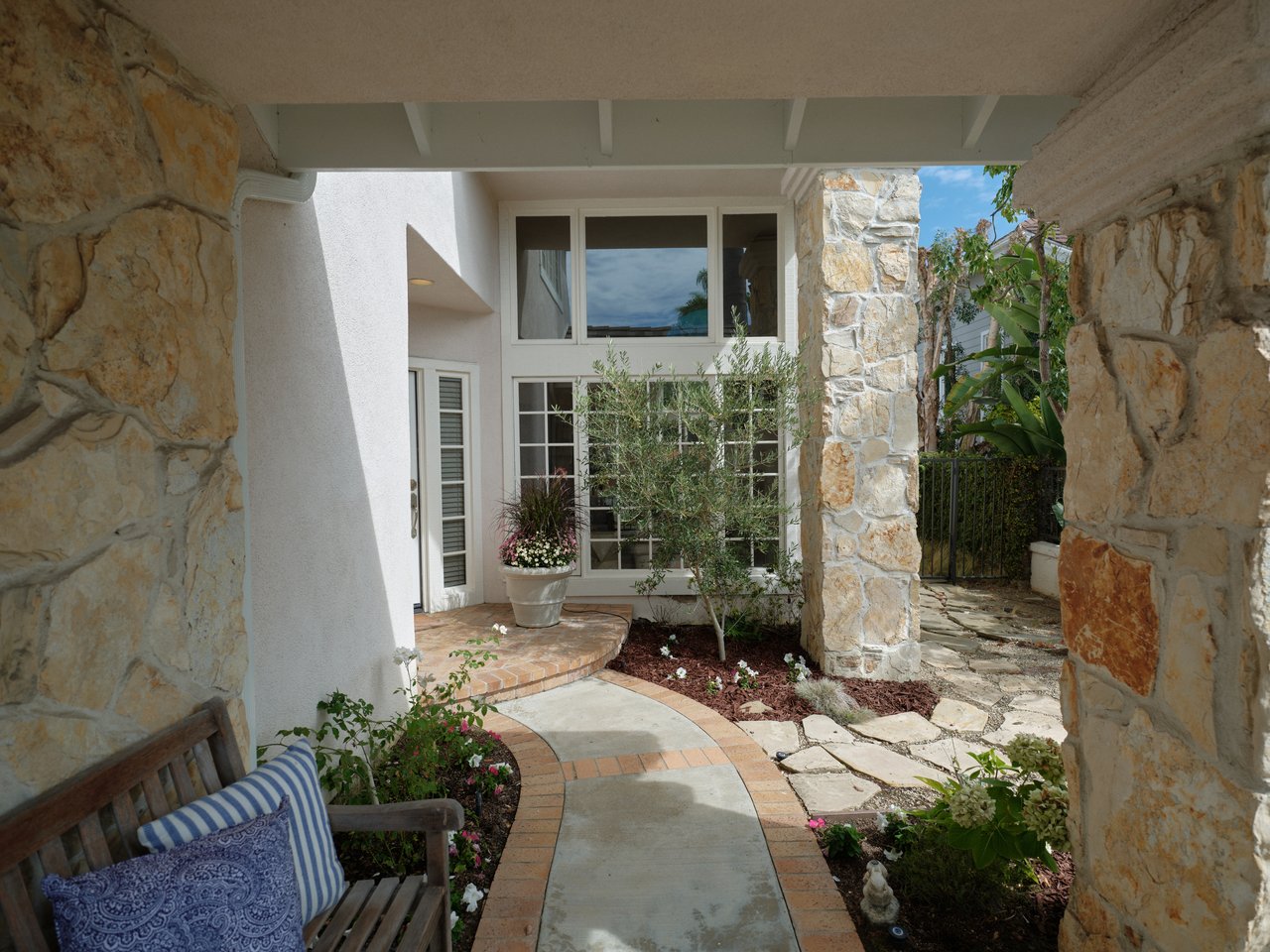
Interior condition plays a major role in Villa Park home values. Buyers at this price point expect clean, updated spaces that justify the asking price.
For buyers, this zoning structure is both the attraction and the challenge. You are buying into a community with extraordinary land-use protections, which insulates property values from the kind of high-density development pressure that erodes exclusivity in other Orange County cities. The trade-off is that inventory is perpetually limited. In a city with fewer than 2,000 total housing units, turnover is slow. When you find the right property in Villa Park, you need to be prepared to act, and you need to be represented by someone who knows which streets, which lots, and which floor plans command premiums.
Schools in Villa Park: What Families Need to Know
Schools are one of the primary reasons families choose Villa Park, and the Orange Unified School District serves the community with four campuses located within city limits. There are two elementary schools (Villa Park Elementary and Serrano Elementary), one middle school (Cerro Villa Middle School), and one high school (Villa Park High School).
Villa Park High School has earned recognition as a U.S. News and World Report Best High School for six consecutive years as of the 2025-2026 rankings. The school is ranked 453rd in the state of California and 3,324th nationally. The AP participation rate at Villa Park High School is 45%, and the school maintains graduation rates above the state average along with higher student performance than the state average in reading, math, and science on state-required assessments.
It is worth noting that approximately 4,700 students attend the four OUSD schools located in Villa Park, but estimates suggest that only 7% to 10% of those students actually live within city limits. The rest commute in from parts of Orange and Anaheim that fall within the same school boundaries. This means that more than 4,000 students travel in and out of Villa Park every school day, which creates traffic patterns during morning drop-off and afternoon pick-up that prospective buyers should factor into their daily routines.
The school situation is also an important distinction when comparing Villa Park to neighboring Yorba Linda, which is served by the Placentia-Yorba Linda Unified School District (PYLUSD). PYLUSD carries significant weight with buyers in the north Orange County market, and Yorba Linda High School holds a 10/10 GreatSchools rating. Villa Park families should understand that they are in Orange Unified, not PYLUSD, and should verify school boundaries carefully before purchasing. I always walk clients through this distinction because it affects not only the day-to-day school experience but also resale value down the line.
How Villa Park Compares to Yorba Linda, Anaheim Hills, and North Tustin
Buyers in the $2 million to $3 million range in east Orange County are typically comparing Villa Park against three other communities: Yorba Linda, Anaheim Hills, and North Tustin. Each offers a distinct lifestyle proposition, and understanding the differences is essential to making the right choice.
Yorba Linda sits immediately to the northeast and offers a broader range of housing options, from entry-level homes in the low $800,000s up to luxury estates in Kerrigan Ranch and Hidden Hills exceeding $5 million. The median home price in Yorba Linda is approximately $1.3 million, which is significantly lower than Villa Park's median of $2.4 million to $2.6 million. That gap reflects the difference in lot sizes, density, and the broader mix of housing types in Yorba Linda. PYLUSD is a major advantage for Yorba Linda buyers who prioritize school district rankings above all else. For lifestyle, Yorba Linda also offers better access to trails, the Town Center retail area, and proximity to the Nixon Presidential Library. If you want to understand Yorba Linda's luxury market in detail, I have written extensively about what homeowners and buyers need to know there.
Anaheim Hills offers hillside living with dramatic views, gated communities like Copa De Oro and Peralta Hills, and a wider range of price points starting in the high $600,000s for condominiums. Anaheim Hills is served primarily by the Orange Unified School District, the same district as Villa Park, with some homes north of the Santa Ana River falling into PYLUSD territory. The community has over 50 distinct neighborhoods, each with its own character, HOA structure, and price dynamics. Compared to Villa Park, Anaheim Hills offers more inventory and more diversity of housing types, but you sacrifice the half-acre lot sizes and the exclusively residential character that define Villa Park.
North Tustin is the closest comparison to Villa Park in terms of character. The unincorporated area offers large lots, mature trees, and a semi-rural feel. However, North Tustin lacks the municipal structure and zoning protections that Villa Park's city government provides. The school situation is also different, with North Tustin homes potentially falling into multiple different school districts depending on location. For buyers who want the big-lot lifestyle with the added security of a city government specifically designed to protect residential character, Villa Park is the stronger choice.
What Sellers Need to Know Right Now
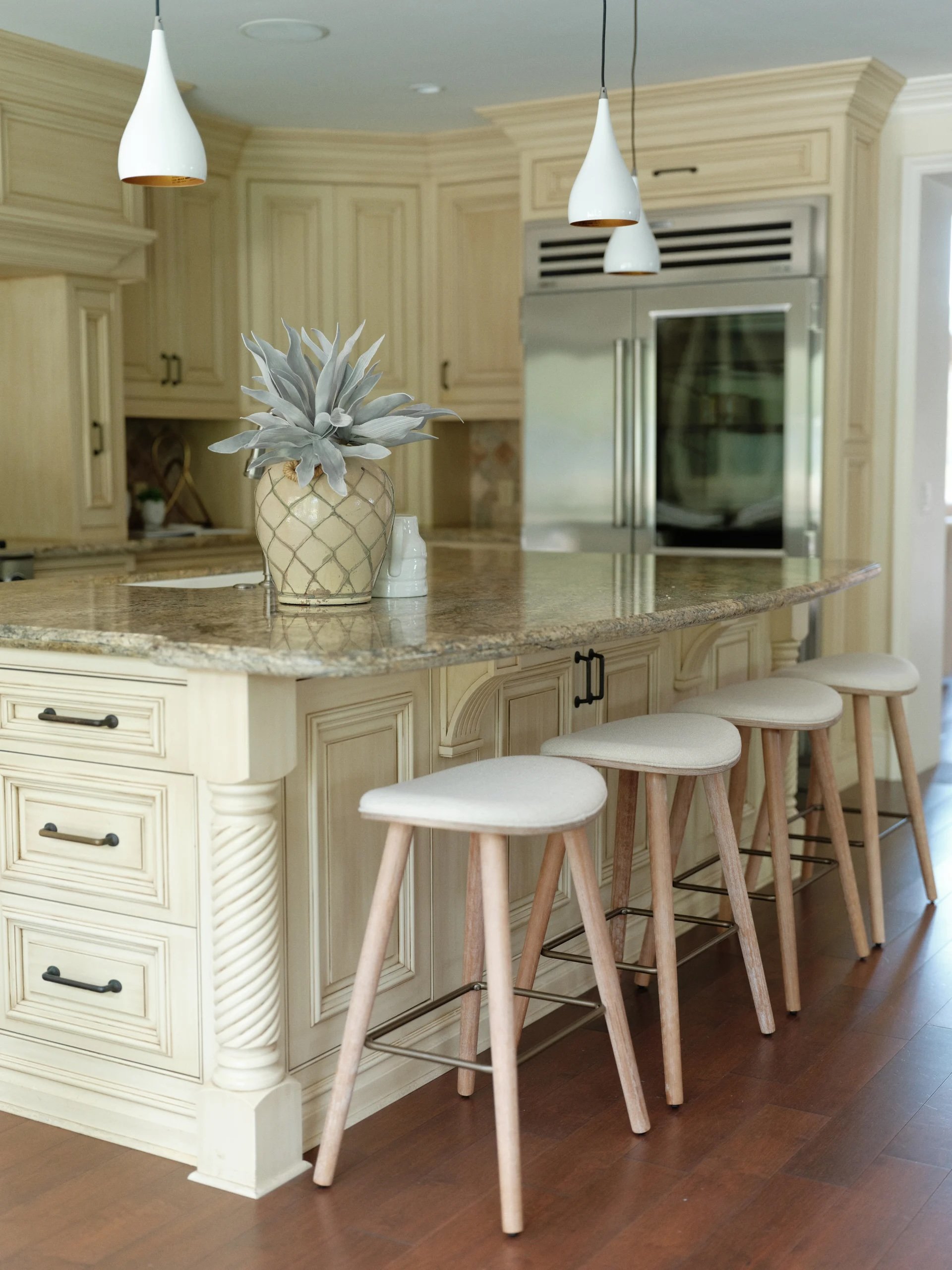
Updated kitchens remain one of the biggest value drivers in the Villa Park real estate market.
If you own a home in Villa Park and are considering a sale in 2026, the data points you need to internalize are these. Three out of four recent closed sales came in below asking price. The one exception was on Patrician Drive, one of the most desirable streets in the city, and even that sale required thoughtful pricing to generate competitive interest. Days on market are stretching, with several recent sales taking 70 to 174 days to close. That is not a market where you can list high and negotiate down. That is a market where precision pricing from day one determines whether you sell in two months or sit for six.
The buyers shopping in Villa Park at the $2 million to $3.5 million price point are sophisticated. They are comparing your property not just against other Villa Park listings but against top-tier homes in Yorba Linda, North Tustin, and even parts of the Newport Coast and Laguna Niguel markets. They have access to the same data you do, and they are working with agents who will run comparable sales analyses down to the dollar per square foot.
My advice to Villa Park sellers is consistent: invest in preparation, price to the market, and present a property that justifies its ask from the first showing. I have written a comprehensive home selling checklist that covers staging, pricing strategy, and the pre-listing steps that separate homes that sell quickly from those that linger. The principles apply directly to Villa Park even though that piece focuses on Yorba Linda. A $2.5 million buyer in east Orange County evaluates quality the same way regardless of which city the home sits in.
What Buyers Need to Know Right Now
For buyers targeting Villa Park, the spring 2026 market presents an interesting window. Mortgage rates have come down meaningfully from where they were a year ago, with the 30-year fixed averaging roughly 6.2% compared to 6.7% at this time in 2025. That improvement, combined with sellers who are increasingly willing to negotiate below asking price, creates more room to find value than buyers have had in several years.
The challenge is inventory. With only 8 to 9 active listings at any given time in the entire city, your options are limited, and the right property may not be available when you start your search. This is where working with an agent who has deep local relationships becomes essential. In a market this small, off-market opportunities and coming-soon listings can represent a significant share of available inventory. I have represented buyers and sellers in Villa Park and the surrounding east Orange County communities for over 20 years, and many of my transactions begin with a conversation long before a property hits the MLS.
Buyers should also understand the unique insurance and property tax dynamics in Villa Park. California's Proposition 13 caps the base property tax rate at 1% of assessed value with a maximum annual increase of 2%. Because Villa Park has no Mello-Roos districts or Community Facilities Districts, the effective tax rate is generally lower than newer developments in surrounding cities. This is a meaningful cost advantage that reduces your total annual carrying costs compared to similarly priced homes in master-planned communities elsewhere in Orange County.
On the insurance front, the January 2025 Los Angeles wildfires reshaped California's homeowners insurance landscape, with insured losses projected between $35 billion and $45 billion. While Villa Park is not in a Very High Fire Hazard Severity Zone, the broader market tightening has affected premiums and availability statewide. Buyers should begin the insurance shopping process early and factor premium estimates into their purchase budget before making an offer.
A Brief History of Villa Park for Those New to the Area
Villa Park's history stretches back to the 1769 expedition of Gaspar de Portola, when the broader area was named Vallejo de Santa Ana. In 1810, the Spanish Empire granted 62,500 acres to Jose Antonio Yorba, who named the land Rancho Santiago de Santa Ana. That grant eventually gave rise to the communities of Orange, Villa Park, Yorba Linda, and much of the surrounding region.
The area now known as Villa Park was called Mountain View in the 1860s, but the U.S. Post Office refused to allow that name since a Mountain View already existed in Santa Clara County. The community was renamed Villa Park, after a town in Illinois. Through the late 1800s and into the mid-1900s, the area was agricultural land producing grapes, walnuts, apricots, and eventually citrus, which became the dominant crop for roughly 60 years. The Villa Park Orchards Association, founded during the citrus era, still operates as a business in nearby Orange, though the local packing house that served as a community landmark was demolished in 1983.
Villa Park incorporated as a city on January 11, 1962, and the development standards adopted at that time have defined its character ever since. The city was designed from the start to be an exclusively residential community, and seven decades later, that vision remains intact. The Serrano Water District, established by local ranchers in 1876, still provides Villa Park's water today, importing from the Metropolitan Water District of Southern California and drawing groundwater from an aquifer managed by the Orange County Water District.
Understanding this history matters for real estate because it explains why Villa Park has remained so insulated from the kind of redevelopment pressure that has transformed nearly every other community in metropolitan Orange County. The city was built by people who wanted space, quiet, and control over their community's character. The current residents, and the current market, reflect those same priorities.
The Villa Park Lifestyle: What Daily Life Actually Looks Like
Living in Villa Park means choosing a community where the pace is slower and the properties are larger than almost anywhere else you will find within a 30-minute drive of downtown Orange County. The city's parks provide settings for outdoor activities, barbecues, and community events, and the community hosts farmers' markets and seasonal festivals throughout the year. Villa Park's central location puts you minutes from the freeway access points that connect to all of Orange County's employment centers, shopping districts, and coastal communities, while the proximity to the Santa Ana Mountains and Santiago Canyon offers hiking, cycling, and horseback riding within a short drive.
The lack of commercial development within city limits means residents do their shopping and dining in neighboring Orange, Anaheim Hills, or Tustin. The Town Center provides basic conveniences, and City Hall along with a branch of the Orange County Public Libraries system sits adjacent to it. For everything else, you are looking at a 5 to 10 minute drive to surrounding commercial corridors. Some families view this as a trade-off, while others consider it part of the appeal. You live in Villa Park because you want to come home to quiet, space, and privacy. You go elsewhere when you want restaurants, retail, and entertainment.
Horses, cows, sheep, pigs, and goats may be kept for recreational purposes within Villa Park, a reflection of the community's agricultural roots and its ongoing commitment to a lifestyle that does not exist in most of suburban Orange County. For buyers specifically seeking Villa Park luxury homes and equestrian properties, this zoning distinction is a major draw. The 95.4% homeownership rate (with only 4.6% of housing units occupied by renters) further reinforces the stability and long-term investment orientation of the community. People who buy in Villa Park tend to stay, and that pattern shows up directly in the limited inventory that defines this market.
Frequently Asked Questions About Villa Park Real Estate
What is the median home price in Villa Park in 2026?
The median sale price in Villa Park is approximately $2.4 million to $2.6 million based on trailing 12-month data as of early 2026. The median list price for current active listings is between $3.24 million and $3.30 million in March 2026. The Zillow Home Value Index places the average home value at $2,040,233, reflecting a slight decline of 1.7% over the past year. The variation across these data sources reflects the small sample size in Villa Park, where a single high-value or low-value sale can shift the median significantly.
How long do homes take to sell in Villa Park?
Homes in Villa Park sell after an average of 55 days on the market, which is roughly in line with the national average. However, days on market vary widely depending on pricing and condition. Well-priced homes on premium streets have sold in as few as 49 days, while overpriced properties have taken 118 to 174 days to close in recent transactions.
What school district serves Villa Park?
Villa Park is served by the Orange Unified School District. The four OUSD schools within city limits are Villa Park Elementary, Serrano Elementary, Cerro Villa Middle School, and Villa Park High School. Villa Park High School has been recognized as a U.S. News and World Report Best High School for six consecutive years as of 2025-2026. It is important to note that Villa Park is not in the Placentia-Yorba Linda Unified School District, which serves neighboring Yorba Linda.
What is the minimum lot size in Villa Park?
The minimum net lot area in Villa Park is 20,000 square feet throughout most of the city, which works out to roughly half an acre. While some lots can be as small as 8,000 square feet, the vast majority of properties sit on half-acre parcels or larger. This minimum lot size has been enforced since the city incorporated in 1962.
Is Villa Park a good place to invest in real estate?
Villa Park's combination of strict zoning protections, limited inventory, high homeownership rates (95.4%), and strong household incomes ($204,750 median) creates a market with exceptional long-term value stability. The city's exclusively residential character and half-acre minimum lot sizes protect against the kind of high-density development that can dilute property values in other communities. However, the high entry price point and limited transaction volume mean this is a market best suited for long-term holders rather than short-term investors.
Are there any condos or townhomes in Villa Park?
No. Villa Park is zoned entirely for single-family residences. There are no condominiums, townhomes, or apartment buildings within city limits. This is one of the defining characteristics that separates Villa Park from every other city in Orange County.
How does Villa Park compare to Yorba Linda for families?
Both communities are excellent for families, but they differ in meaningful ways. Yorba Linda is served by the Placentia-Yorba Linda Unified School District, which is generally rated higher than Villa Park's Orange Unified School District. Yorba Linda also offers a wider range of price points, more inventory, and better access to retail, dining, and trails. Villa Park offers larger lot sizes, lower density, no Mello-Roos assessments, and a more exclusive residential character. The right choice depends on your priorities around schools, space, and lifestyle.
Work with a Local Expert Who Knows Villa Park
Villa Park is a market where local expertise is not a luxury. It is a necessity. With fewer than 10 homes actively listed at any given time, pricing decisions, negotiation strategies, and access to off-market opportunities are all driven by relationships and knowledge that only come from decades of working in this specific community.
I am Brian Kidd, founder of Canyon Realty and a lifelong Orange County resident with over 40 years in east Orange County and more than 20 years of experience in real estate and mortgage lending. I help families buy and sell homes across Villa Park, Yorba Linda, and Anaheim Hills, and my background in both real estate brokerage and mortgage lending means I can guide you through every step of the process, from your first property search through financing and closing.
Whether you are a seller trying to determine the right price for your Villa Park estate, a buyer navigating the challenges of a market with single-digit inventory, or a homeowner considering a refinance in a shifting rate environment, I am here to help.
Call me at (714) 404-8152 or visit canyonrealty.com/contact to start a conversation. No pressure, just straight answers from someone who has been doing this in your neighborhood for over two decades.
If you own a home in Villa Park and want to understand what it is worth in today's market, request a free home valuation and I will put together a detailed analysis based on current comparable sales in the 92861 zip code.
Browse current Villa Park listings on our site, learn more about my approach as a Villa Park real estate agent, or explore our neighborhood guides to compare Villa Park against other east Orange County communities.