If you are buying a hillside home in Anaheim Hills, the purchase price is not your biggest financial risk. Insurance is.
I am not being dramatic. California's wildfire insurance market has changed more in the past 18 months than it did in the previous 20 years. The January 2025 Los Angeles wildfires burned through Pacific Palisades and Altadena, triggering $22.4 billion in insurance payouts and exposing deep cracks in a system that was already under stress. Nine new insurance laws took effect on January 1, 2026. The California FAIR Plan, the state's insurer of last resort, has grown from 154,494 homeowner policies in September 2019 to over 668,000 as of late January 2026. That is a 4.3x increase in just over six years. And the FAIR Plan has filed for a 35.8% rate increase set to take effect in spring 2026, its largest in at least seven years.
I am Brian Kidd with Canyon Realty. I have lived in North Orange County for over 40 years and sold homes here for more than 20. I grew up in Yorba Linda. I know every hill, canyon, and ridgeline in Anaheim Hills. And I am telling every buyer I work with the same thing right now: get your insurance figured out before you fall in love with a hillside home, not after.
This post covers the actual facts. Current data. New laws. What you can do. No speculation.
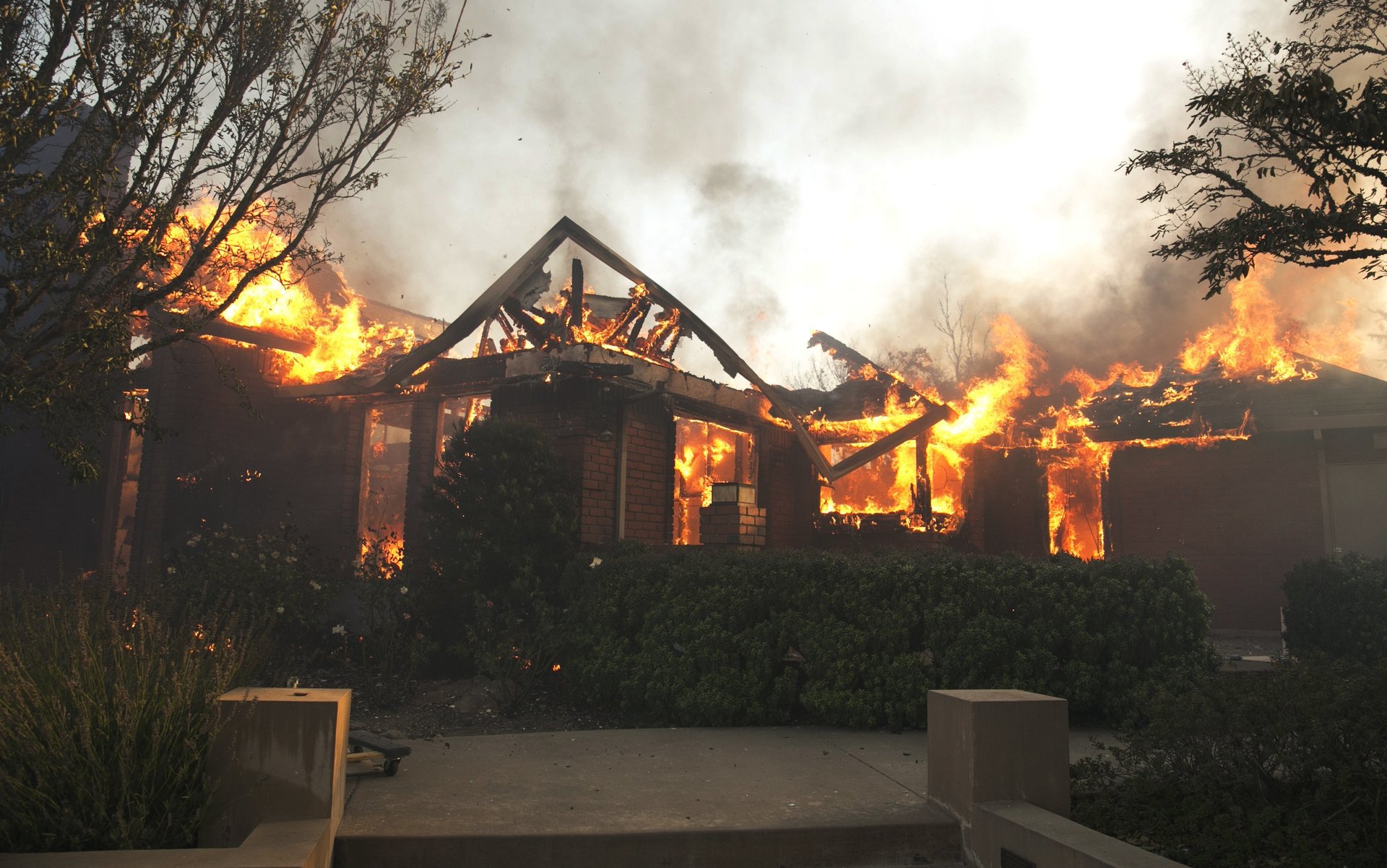
Wildfires can move through residential neighborhoods with devastating speed, which is why insurance availability has become a major issue for hillside homes across Southern California.
Anaheim Hills Fire Risk: What the Data Actually Shows
Let me start with what Cal Fire says, because that is what your insurance company uses.
Cal Fire updated its Fire Hazard Severity Zone (FHSZ) maps in spring 2025. Portions of Anaheim Hills are designated as Very High Fire Hazard Severity Zones (VHFHSZ), particularly in the eastern hillside areas. Other areas carry a High Fire Hazard Severity Zone designation. You can view the updated maps on the City of Anaheim's Fire Hazard Severity Zones page or contact Anaheim's Wildfire Mitigation Specialist Adrian Abel at (714) 765-4039.
According to Redfin and First Street Foundation data, approximately 62% of Anaheim Hills properties face some level of wildfire risk over the next 30 years. That number is higher for hillside properties in communities like Summit Pointe, Belsomet, Hidden Canyon, Copa de Oro, and Peralta Hills where homes sit on ridgelines and in canyons surrounded by brush and open space.
Here is the important context: Anaheim has been actively reducing its utility-related fire risk. About 162 miles of power lines run through fire-risk areas in Anaheim Hills, and 98% of those are already underground. The city is on track to have all city-owned power lines in wildfire risk areas underground by late 2026, according to a project coordinated between Anaheim Public Utilities and FEMA. That is a meaningful infrastructure investment. The caveat is that larger regional transmission lines owned by Southern California Edison still run through the hills, and those remain above ground.
This is the kind of detail that matters when you are evaluating a hillside property. A home on a ridge served exclusively by underground city power has a different risk profile than a home near SCE overhead transmission lines. I walk these properties and assess these factors for every buyer I represent.
The California FAIR Plan: What It Is, What It Costs, and Why It Matters
If a private insurer will not write a policy for a hillside home in Anaheim Hills, the California FAIR Plan becomes your fallback. Understanding what it does and does not cover is critical.
The FAIR Plan is a state-mandated insurance pool that provides basic fire and property coverage when private carriers decline to insure a property. It was designed as a last resort for a limited number of high-risk properties. It was never intended to insure hundreds of thousands of homes. But that is exactly what has happened.
The numbers tell the story. FAIR Plan residential exposure grew 424% between September 2020 and June 2025, reaching $603 billion. Written premium rose from $1.93 billion to $1.96 billion in the final three months of 2025 alone. Total residential exposure hit $645.23 billion by the end of September 2025, a 50% increase. And the plan has filed for an average 35.8% rate increase starting in spring 2026, which would be its first rate application using wildfire catastrophe models and reinsurance costs.
What the FAIR Plan does NOT cover is equally important. Standard FAIR Plan policies exclude liability coverage, water damage, theft, and many other perils that a standard homeowner's policy includes. If you end up on the FAIR Plan, you will also need a separate Difference in Conditions (DIC) policy to fill those gaps. That means two policies, two premiums, and two sets of deductibles.
For a hillside home in Anaheim Hills valued at $1.5 million to $3 million (the range for most gated community and hillside properties), FAIR Plan premiums can run significantly higher than what you would pay through a private carrier. Even first-time buyers looking at entry-level hillside condos or townhomes need to factor this in. Add the DIC policy on top of that, and you could be looking at annual insurance costs that are 2x to 3x what a comparable home in a non-fire-zone would pay.
For investors evaluating Anaheim Hills rental properties, insurance costs can make or break your cash-flow projections. And for sellers, understanding your current insurance situation and being transparent about it during the sales process helps avoid deal-killing surprises in escrow.
This is why I tell every buyer: get insurance quotes before you submit an offer on a hillside property. Not after the inspection. Not during escrow. Before.
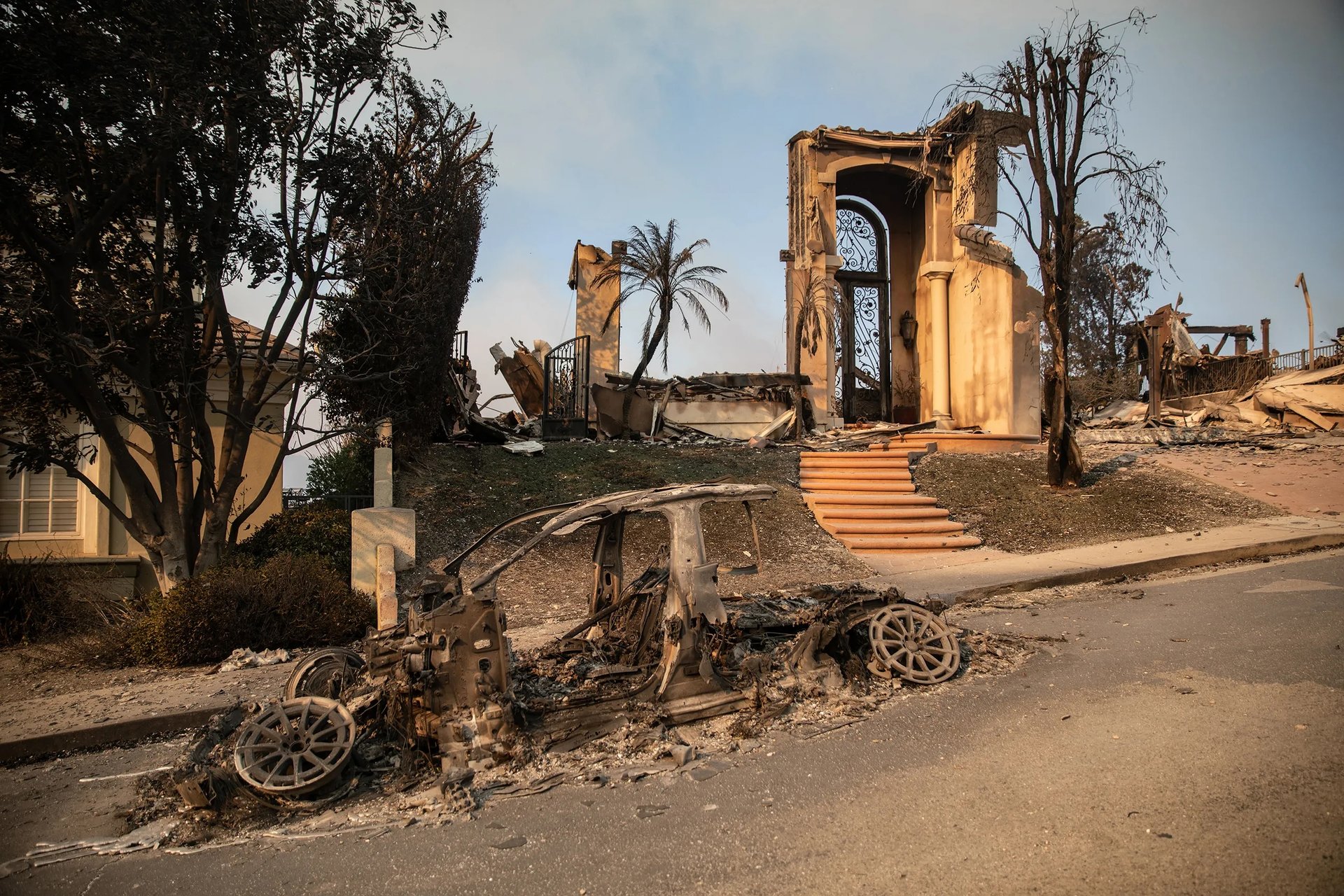
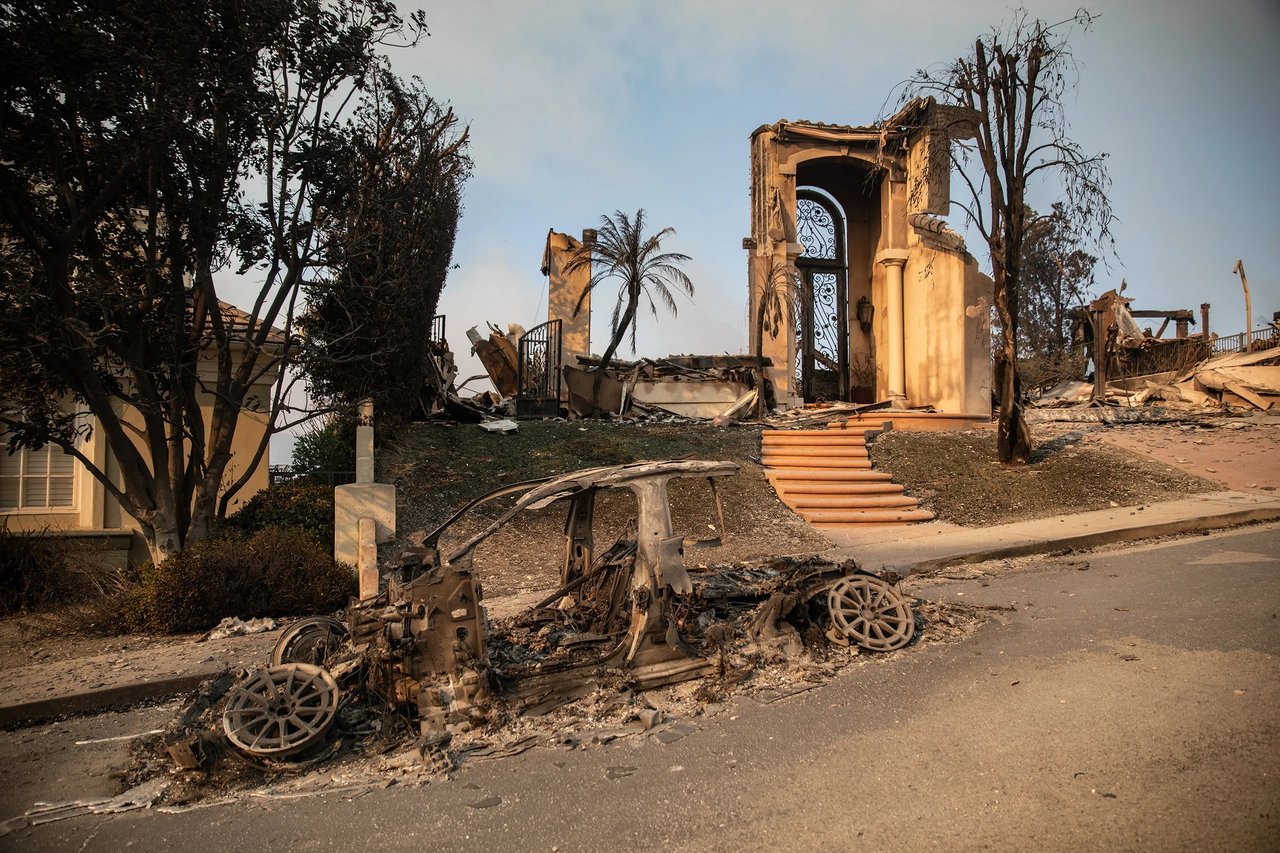
Wildfire destruction across California has forced insurers to reevaluate coverage in high-risk areas, especially hillside communities.
Nine New California Insurance Laws That Took Effect January 1, 2026
The California Legislature passed a significant package of insurance reforms in response to the LA fires and the broader insurance crisis. Here are the ones that directly affect Anaheim Hills hillside home buyers and owners.
The California Safe Homes Act (AB 888). This law establishes a new grant program to help qualifying homeowners pay for fire-safe roofs and fire mitigation measures within five feet of their homes, known as "Zone Zero." The program will cover part or all of the costs for eligible low- and middle-income homeowners. The California Department of Insurance has indicated that applications could begin in spring 2026. If you own a hillside home in Anaheim Hills and qualify, this could offset a significant portion of the cost of home hardening. Source: California Department of Insurance, Press Release 079-2025.
The Insurance and Wildfire Safety Act (AB 1). This law requires the Department of Insurance to regularly review and update its Safer from Wildfires regulations to reflect advances in fire science and mitigation. The practical impact is that as new home hardening measures prove effective, they get added to the list of actions that qualify for insurance discounts. Source: same press release above.
Eliminate "The List" Act (SB 495). After a total loss from wildfire, insurance companies are now required to pay 60% of contents coverage limits (capped at $350,000) without requiring the homeowner to submit a detailed inventory list. Policyholders also get at least 100 days to provide proof of loss after a declared emergency. If you have ever tried to itemize every possession in your home from memory after losing everything, you understand why this matters.
The Smoke Damage Recovery Act (AB 1795). Introduced in early 2026, this would be the first law in the nation establishing enforceable public health and insurance standards for smoke-damaged homes. Modern wildfires produce toxic smoke that can contaminate homes miles from the fire line. For Anaheim Hills homeowners, smoke damage from a fire in adjacent open space or neighboring communities is a real risk even if your home does not burn. Source: California Department of Insurance, Press Release 006-2026.
The Disaster Recovery Reform Act. Introduced by Commissioner Ricardo Lara and Senator Steve Padilla in early 2026, this bill would double penalties for insurers who violate fair claims practices during emergencies, require insurance companies to submit disaster-recovery plans, expand upfront claims payments, and require status updates within five days whenever a new adjuster is assigned to a claim. Source: California Department of Insurance, Press Release 001-2026.
These laws represent real structural changes. They do not solve the affordability problem, but they do strengthen consumer protections and create incentives for both homeowners and insurers to invest in wildfire mitigation.
Home Hardening: What It Is and How It Lowers Your Premium
Home hardening refers to retrofitting your home with fire-resistant materials and creating defensible space around the structure. It is not just good safety practice. It is now directly tied to your insurance premium through state-mandated discount programs.
The California FAIR Plan offers discounts in three categories that can combine for up to 24.5% off your premium:
Immediate surroundings discount. Requires defensible space compliance, removal of combustible materials within 5 feet of the home (Zone Zero), clearing vegetation and debris from decks and patios, and removal of combustible structures within 30 feet. Source: California FAIR Plan wildfire discount announcement.
Structural discount. Requires fire-resistant improvements to the home itself: enclosed eaves, ember-resistant vents, Class A fire-rated roofing, dual-pane or tempered glass windows, and fire-resistant exterior siding.
Firewise community discount. If your neighborhood participates in the NFPA's Firewise USA program, an additional 10% discount may apply.
Private carriers are also expanding their wildfire mitigation discounts. AAA now offers a "My Home Hardening" discount of up to 12.5% for policies effective after October 2025. Mercury Insurance is introducing new wildfire mitigation discount tiers alongside a 6.9% rate increase effective July 1, 2026. The discount tiers are designed to offset the rate increase for homeowners who have documented defensible space and home hardening features.
For Anaheim Hills hillside homes, the most impactful hardening measures include:
Replacing wood shake or composite roofing with Class A fire-rated materials. Enclosing open eaves and soffits. Installing ember-resistant attic and crawl space vents. Clearing all combustible vegetation, furniture, and materials from the 0-5 foot zone around the home. Maintaining 100 feet of defensible space (which on hillside lots may extend to the property line and beyond into common areas managed by the HOA or city). Ensuring decks are built with or retrofitted using fire-resistant materials.
Many of the hillside homes in communities like Peralta Hills, Copa de Oro, and Hidden Canyon were built in the 1980s and 1990s with materials that would not meet today's fire codes. Upgrading these homes is not cheap. A full home hardening retrofit on a 3,000 to 5,000 square foot hillside home can cost $15,000 to $60,000 or more depending on the scope. But the combination of insurance premium reductions, increased property value, and actual fire safety makes it one of the smartest investments a hillside homeowner can make.

Hillside homes surrounded by brush and open space face some of the highest wildfire exposure in Southern California.
The Sustainable Insurance Strategy: Why the Market Is Changing
Understanding why insurance is harder to get requires understanding what California changed at the regulatory level.
For decades, California was the only state that prohibited insurers from using forward-looking catastrophe models in setting rates. Carriers could only use historical loss data. In a state where wildfire risk is increasing due to climate conditions, drought, and development patterns, historical data dramatically understated the actual risk. Insurers responded by pulling out of high-risk areas or leaving the state entirely.
Commissioner Ricardo Lara's Sustainable Insurance Strategy, finalized in 2025, changed the rules. Insurers can now use catastrophe models and factor reinsurance costs into their rate filings. In exchange, they must commit to writing policies in wildfire-distressed ZIP codes and recognize home hardening mitigation in their pricing.
The Department of Insurance completed its review of the first wildfire catastrophe model (Verisk) and the second (Moody's RMS) in mid-2025. Two insurance companies have received approval for their plans under the new rules, with more filings underway.
What this means for Anaheim Hills buyers: the private insurance market should gradually expand back into hillside and fire-zone areas, but premiums will be higher than historical levels because the new pricing reflects the actual modeled risk. The tradeoff is availability. Higher rates, but coverage you can actually get. That is a better situation than the alternative: no private coverage available at any price.
What Every Anaheim Hills Hillside Home Buyer Must Do Before Closing
Based on everything above, here is the specific checklist I walk through with every buyer looking at hillside property in Anaheim Hills.
1. Check the FHSZ designation. Visit anaheim.net/6660/Fire-Hazard-Severity-Zones and confirm whether the property is in a Very High, High, or Moderate Fire Hazard Severity Zone. This designation directly impacts your insurance options.
2. Get insurance quotes before submitting an offer. Contact at least three carriers plus the FAIR Plan. Ask for quotes on both a standard homeowner's policy and a FAIR Plan + DIC combination so you can compare total annual costs.
3. Review the home's existing hardening and defensible space. During inspections, specifically evaluate: roof material and fire rating, eave and vent condition, exterior siding material, vegetation within 5 feet and 30 feet of the structure, and condition of any retaining walls or slopes that could affect fire behavior.
4. Ask about the seller's current insurance. If the seller has private coverage, ask who the carrier is and what they are paying. In some cases, you may be able to apply with the same carrier. If the seller is on the FAIR Plan, that tells you something about the property's insurability.
5. Factor insurance into your budget before you tour. On a $2 million hillside home, annual insurance could range from $5,000 (private carrier, low-risk zone, hardened home) to $15,000 or more (FAIR Plan + DIC, high-risk zone, older construction). That is a $400 to $1,250 per month difference in your housing cost.
6. Investigate the HOA's master policy. In gated communities, the HOA may carry a master insurance policy for common areas, gates, clubhouses, and sometimes structural coverage for attached units. Review what the master policy covers, what your individual HO-6 or HO-3 policy needs to cover, and whether the HOA has had any difficulty obtaining or affording its own coverage.
7. Understand evacuation routes. Many Anaheim Hills hillside communities have a single access road. A 450-unit housing proposal near the former Regal Cinemas site in Anaheim Hills generated significant community opposition in early 2026 specifically because of wildfire evacuation concerns in a Very High Fire Hazard Severity Zone. Knowing the evacuation plan for your neighborhood is not optional if you live on a hillside.
This Is Solvable. But You Have to Take It Seriously.
I want to be clear: I am not telling you not to buy a hillside home in Anaheim Hills. I own property in North Orange County. I have sold hundreds of homes in these hills. The views from Summit Pointe, the privacy of Hidden Canyon, the canyon setting of Peralta Hills, these are some of the most desirable residential properties in all of Southern California.
But the insurance situation is fundamentally different than it was even two years ago. Buying a hillside home without understanding your insurance costs, your hardening options, and your rights under the new California laws is a financial risk I would not let any of my clients take.
I am a licensed real estate broker and mortgage broker. I evaluate every deal from the property side, the financing side, and now the insurance side, because in 2026 you cannot separate those three things. If you are looking at hillside property in Anaheim Hills, Yorba Linda, or anywhere in North Orange County, call me. I will walk you through the full picture before you write an offer.

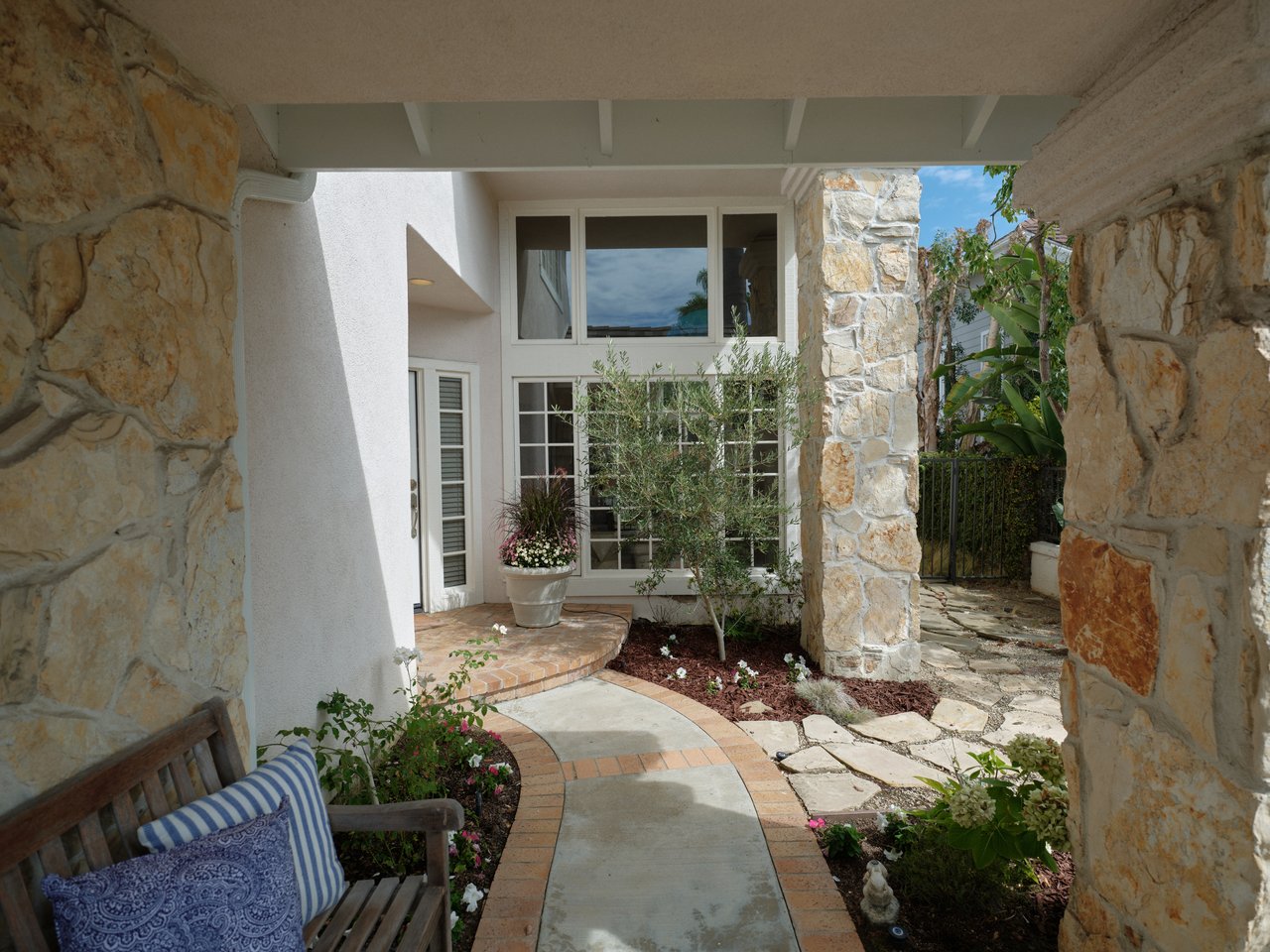
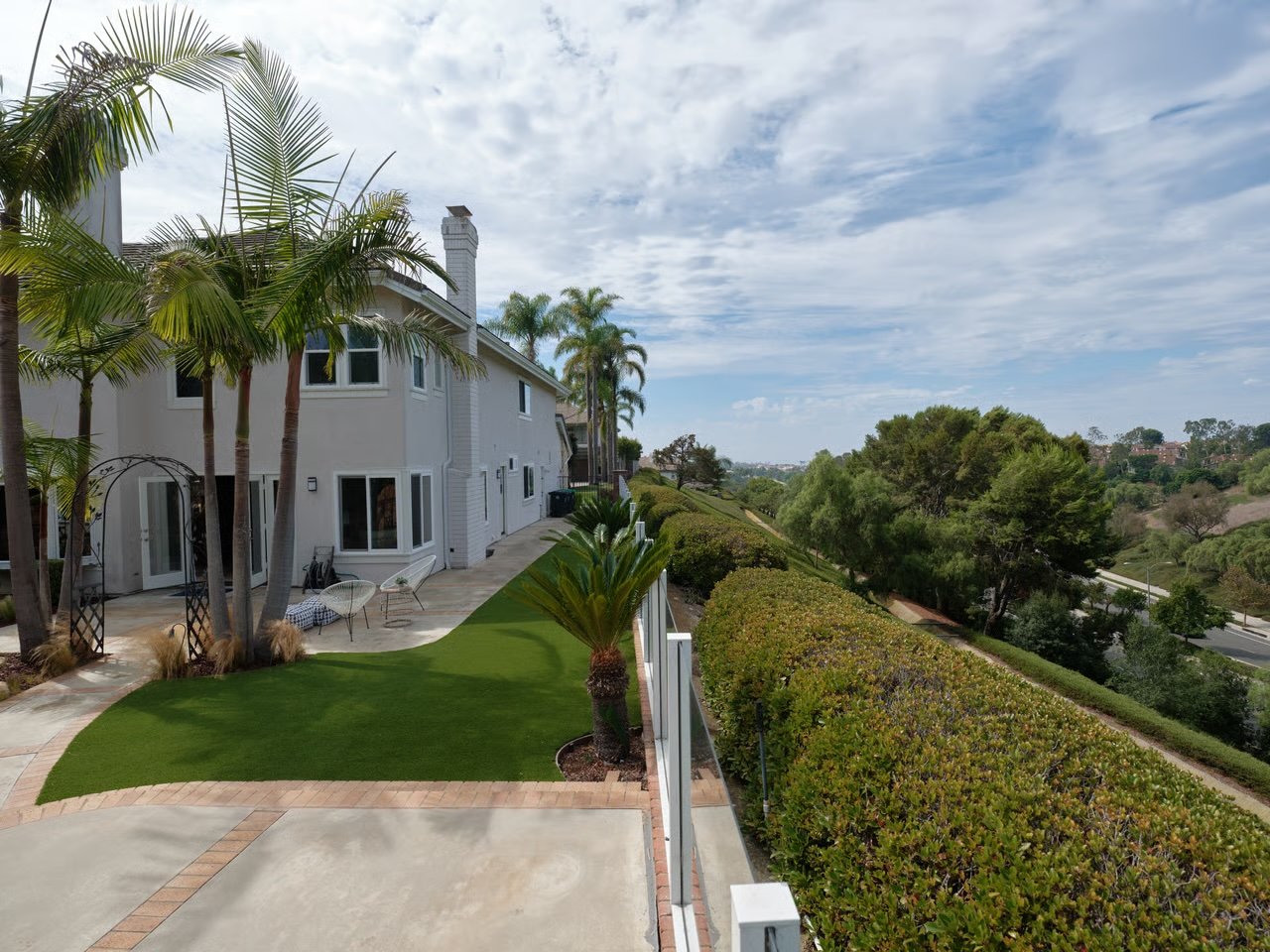
Many Anaheim Hills hillside homes like this sit near canyon terrain and open space, which can influence wildfire risk and insurance availability.
Frequently Asked Questions
Is it hard to get homeowner's insurance in Anaheim Hills?
It depends on the specific property. Homes in designated Very High Fire Hazard Severity Zones on hillsides with brush exposure may face limited options from private carriers. California's Sustainable Insurance Strategy, finalized in 2025, is designed to bring private insurers back into fire-distressed areas, but the transition is ongoing. If private coverage is unavailable, the California FAIR Plan provides basic fire coverage as a last resort. All Anaheim Hills buyers should obtain insurance quotes before submitting a purchase offer.
How much does wildfire insurance cost in Anaheim Hills?
Costs vary significantly based on the home's fire zone designation, construction materials, defensible space, and coverage limits. Private carrier policies for well-hardened homes in moderate-risk areas may be comparable to standard rates. FAIR Plan policies for older homes in Very High Fire Hazard Severity Zones can cost substantially more, and you will need a separate Difference in Conditions policy for liability and other coverages. Budget for annual insurance of $5,000 to $15,000+ depending on the property.
What is the FAIR Plan and do I want to be on it?
The California FAIR Plan is the state's insurer of last resort, providing basic fire and property coverage when private insurers decline. It now covers over 668,000 homes statewide, up from about 154,000 in 2019. FAIR Plan policies are more limited than standard homeowner's policies (no liability, no water damage, no theft coverage) and require a separate DIC policy to fill those gaps. A pending 35.8% rate increase would take effect in spring 2026. The FAIR Plan is a safety net, not an ideal long-term solution.
Can home hardening lower my insurance premium?
Yes. California mandates that insurers offer premium discounts for verified wildfire mitigation. The FAIR Plan offers up to 24.5% in combined discounts for defensible space, structural hardening, and Firewise community participation. Private carriers like AAA offer up to 12.5%, and Mercury Insurance is introducing new discount tiers in 2026. The most impactful measures include Class A fire-rated roofing, enclosed eaves, ember-resistant vents, and maintaining a 5-foot noncombustible zone around the home.
Are there grants available for wildfire home hardening in California?
Yes. The California Safe Homes Act (AB 888) took effect January 1, 2026, establishing a grant program to help qualifying low- and middle-income homeowners pay for fire-safe roofs and Zone Zero mitigation measures. Applications are expected to begin in spring 2026 through the California Department of Insurance. Contact Anaheim's Wildfire Mitigation Specialist at (714) 765-4039 for local resources.
Sources
-
California Department of Insurance, Press Release 079-2025. "New laws sponsored by Commissioner Lara to strengthen consumer protections and wildfire resilience take effect January 1." insurance.ca.gov
-
California Department of Insurance, Press Release 006-2026. "Commissioner Lara and Assemblymember Gipson Unveil the Smoke Damage Recovery Act." insurance.ca.gov
-
California Department of Insurance, Press Release 001-2026. "Commissioner Lara and Senator Padilla announce Disaster Recovery Reform Act." insurance.ca.gov
-
California Department of Insurance, Press Release 052-2025. "Reform made real: California Department of Insurance completes final evaluation of wildfire catastrophe model." insurance.ca.gov
-
ABC10, "CA FAIR Plan quadruples number of active policies in six years." January 2026. abc10.com
-
Insurance Business Magazine, "FAIR Plan growth fuels debate over California insurance reforms." January 15, 2026. insurancebusinessmag.com
-
Insurance Business Magazine, "You cannot depopulate the FAIR Plan if it's cheaper." January 2026. insurancebusinessmag.com
-
Orange County Register, "All Anaheim-owned power lines in fire risk areas to be underground by 2026." August 29, 2025. ocregister.com
-
City of Anaheim, Fire Hazard Severity Zones. anaheim.net
-
City of Anaheim, Undergrounding within Wildfire Threat Zones. anaheim.net
-
CalMatters, "California homeowners could qualify for grants for new roofs and fire safety." January 1, 2026. calmatters.org
-
CalMatters, "Many Southern California fire survivors face insurance delays." January 7, 2026. calmatters.org
-
California FAIR Plan, "FAIR Plan to Offer New Discounts for Homeowners Taking Steps to Protect Against Wildfire." cfpnet.com
-
CEPP Substack, "Tracking the Growth of Residential Exposure in California's FAIR Plan." August 2025. cepp.substack.com
-
Voice of OC, "Anaheim Hills Housing Proposal Sparks Wildfire Evacuation Concerns." February 2026. voiceofoc.org