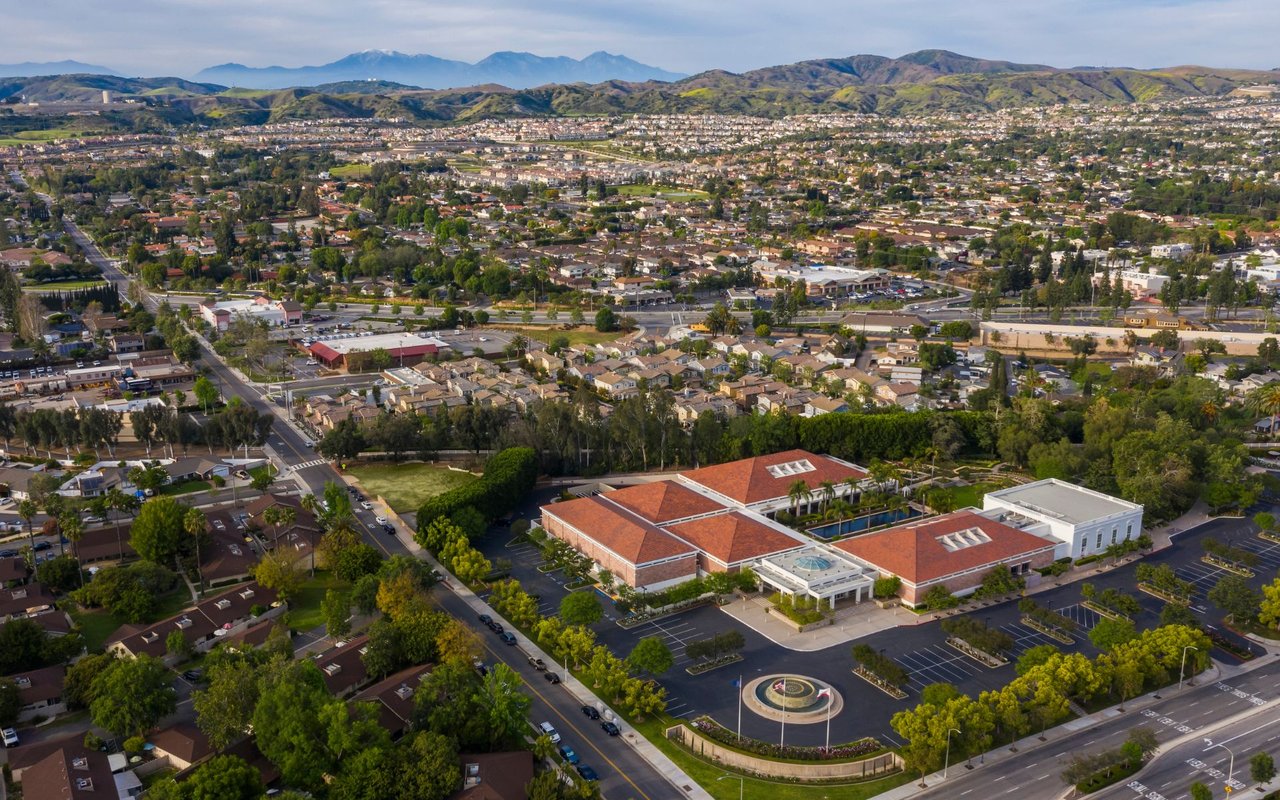
Moving to Anaheim Hills in 2026 lands you in one of the safest, best-schooled, most desirable suburbs in north Orange County, and the median single-family home price near $1.27 million is the cost of admission. The neighborhood sits on the hillside east of the 91 Freeway, twenty miles inland from the coast, with a Niche-grade-A safety rating, a top-30-percent-in-California public high school, an upper-middle median household income above $130,000, and a quality of life that explains why families pay a real premium to plant roots here. This guide covers what relocating to Anaheim Hills actually looks like in 2026, from neighborhoods and schools to commute realities and the financing math that determines what you can actually afford.
If you are reading this, you are probably one of three people. You are an LA-area family looking to escape the density and reclaim a yard. You are an Inland Empire family trading up into a hillside home and a top-tier school district. Or you are an out-of-state arrival (Texas, Arizona, the Pacific Northwest, or somewhere else) coming to Orange County for a job, a family connection, or a lifestyle reset. The math, the trade-offs, and the right neighborhoods look different for each of those starting points, and I have helped families from all three relocate here repeatedly over the years.
I am Brian Kidd, a licensed California real estate broker and mortgage lender (CA DRE# 01901810) with Canyon Realty. I have been working transactions across Anaheim Hills, Yorba Linda, and Villa Park for over twenty years. I grew up in this part of north Orange County and have lived here for more than forty years. The dual-license background means I can run both the home search and the financing conversation under one roof, which simplifies an already-complicated relocation. If you want a head start on understanding the local landscape before we talk, my Anaheim Hills real estate agent page lays out my approach to representing relocating buyers.
Quick Answer: Anaheim Hills at a Glance for Relocating Families in 2026
Anaheim Hills is a hillside suburban community of approximately 56,845 residents in eastern Anaheim, California, sitting in north Orange County roughly twenty miles from the coast. Median single-family home price is approximately $1.275 million as of February 2026, with median household income at $133,241 and a Niche A safety grade. Most students attend Orange Unified School District (OUSD) schools, anchored by Canyon High School (GreatSchools 10/10, Niche A, ranked top 30 percent in California). The area is car-dependent, with the 91 Freeway, 241 Toll Road, and 55 Freeway providing primary connections to Irvine, downtown LA, and the Inland Empire. Mortgage rates near 6.37 percent in May 2026 mean a $1.3 million Anaheim Hills purchase typically requires household income above $250,000 to qualify under conventional debt-to-income guidelines.
Why Families Are Moving to Anaheim Hills in 2026
The honest answer is some combination of four things: schools, safety, space, and the hill itself. None of those are unique to Anaheim Hills (Yorba Linda and Villa Park share the first three), but the combination at this price point in this specific corner of Orange County is hard to replicate.
The schools are real
Most of Anaheim Hills falls within the Orange Unified School District, with a small eastern pocket served by the Placentia-Yorba Linda Unified School District. Canyon High School, the anchor public high school for most of the community, holds a GreatSchools rating of 10 out of 10, a Niche grade of A, and ranks #290 statewide in California. The school serves 2,178 students in grades 9 through 12, runs an International Baccalaureate program, posts a 96 percent graduation rate, an average GPA of 3.67, and average standardized test scores around 1300 SAT and 28 ACT. Math proficiency is 48 percent (versus the California state average of 34 percent) and reading proficiency is 61 percent (versus the state average of 47 percent). Those are real outcomes, not marketing claims.

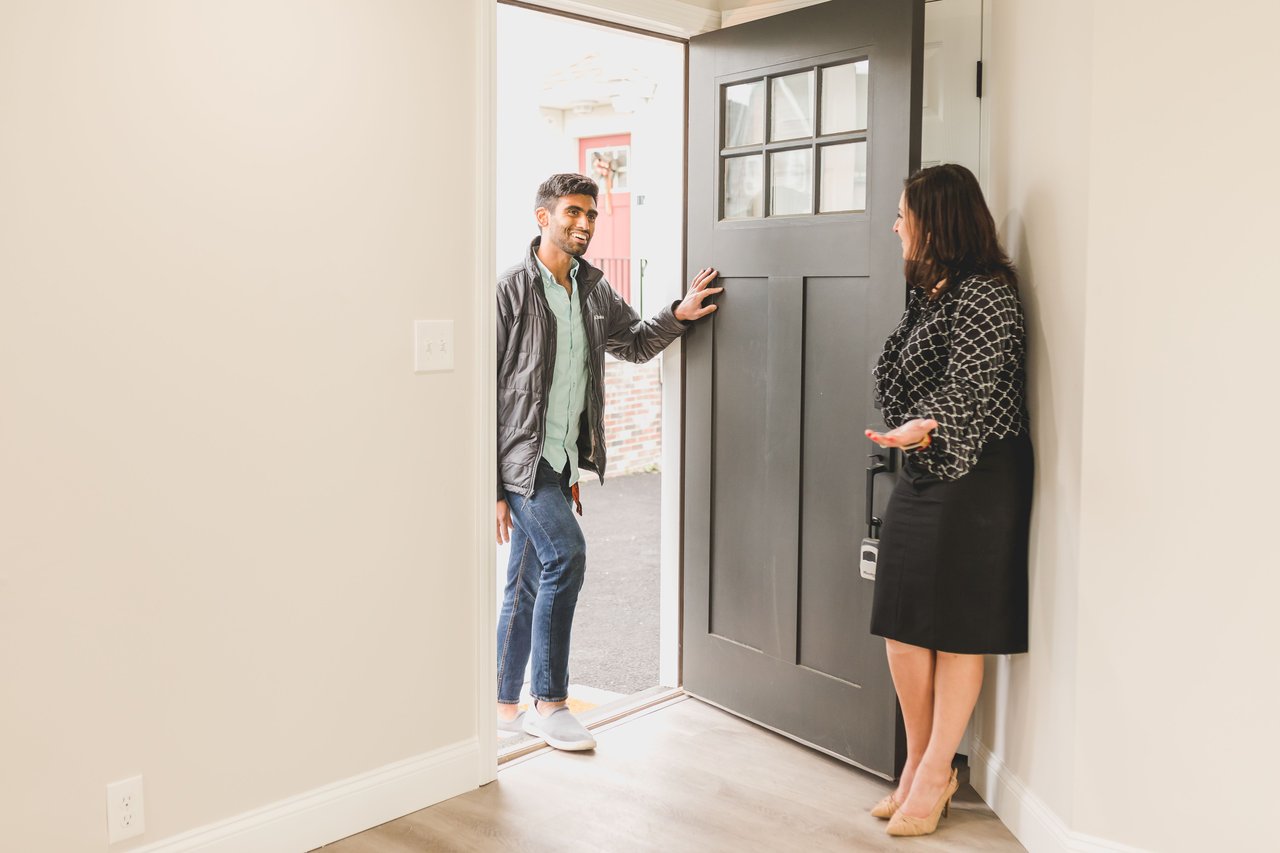
Families move to Anaheim Hills for the schools, the safety, and moments like this one. Brian Kidd has helped families from across the country find the right fit here for over twenty years.
The safety profile holds up
Anaheim Hills carries a Niche A safety grade and a 51 crime index (49 percent below the national average). It is safer than 75 percent of neighborhoods in the City of Anaheim, and crime rates run roughly 39 percent lower than the Anaheim citywide average. For families coming from denser parts of LA, the Inland Empire, or out-of-state metros, the differential is immediately noticeable in everyday quality of life: walking to a neighbor's house, kids playing in cul-de-sacs, leaving the garage open while you grab the mail.
The hillside provides genuine outdoor access
The hill is not just a marketing word. Anaheim Hills sits at the foot of the Cleveland National Forest, and the trail systems at Deer Canyon Park, Oak Canyon Nature Center, Walnut Canyon Reservoir loop, and the broader Santiago Truck Trail network are out the back door for many neighborhoods. Anaheim Hills Golf Course is a working public course threaded through the community. The combination of hillside views, real outdoor recreation, and conventional suburban amenities is one of the things relocating families consistently mention as the unexpected highlight.
The location is strategically central
From Anaheim Hills you can reach Irvine in 25 to 40 minutes, Newport Beach in 35 to 50 minutes, downtown LA in 50 to 90 minutes (depending heavily on traffic), the Inland Empire in 30 to 50 minutes, and John Wayne Airport in 30 to 40 minutes. That central position, combined with multiple freeway options, is why dual-career households and families with kids in Orange County activities find the location so workable.
Anaheim Hills has a population of approximately 56,845 with a median household income of $133,241 and a Niche A safety grade. The area's overall crime index runs 49 percent below the national average, with crime rates 39 percent lower than the Anaheim citywide figure.
The Cost of Living Reality
Relocating families need to plan around three buckets of cost: housing, ongoing carry, and quality-of-life expenses. Each looks different than what you may be coming from.
Housing
The single-family median in Anaheim Hills is approximately $1.275 million as of February 2026 according to most major data sources, though averages and medians vary depending on whether you include condos and townhomes. Condos and townhomes start in the low $700,000s. Mid-tier hillside single-family homes (3,000 to 4,000 square feet, 4 to 5 bedrooms) typically run $1.4 to $1.8 million. Larger luxury homes in Peralta Hills, Hidden Canyon, Belsomet, Summit Pointe, and Mohler Loop run $2 million to $4 million-plus. New-construction inventory is scarce; most of the stock is 1970s through 2000s build, with significant remodeling activity at the higher end.
Property taxes and the Mello-Roos question
California's Proposition 13 caps property tax assessments at 1 percent of purchase price, with local additions typically bringing the effective rate to 1.1 to 1.25 percent annually. On a $1.3 million Anaheim Hills purchase, that is roughly $14,300 to $16,250 per year, or $1,192 to $1,354 per month. Some Anaheim Hills neighborhoods carry Mello-Roos assessments (community facilities district bonds) that add a few hundred dollars to a few thousand annually depending on the parcel. Always verify the specific Mello-Roos status of any home you are considering; it shows up on the property tax bill and matters for the total monthly carry.
HOA dues
Many Anaheim Hills neighborhoods carry HOA dues, typically running $100 to $300 per month for standard tract HOAs. Guard-gated communities like Belsomet, Hidden Canyon, and Summit Pointe carry higher HOA dues (often $400 to $800+ monthly) covering security, common-area maintenance, and amenities. Non-HOA pockets do exist, particularly in older Peralta Hills sections and some equestrian-edge properties.
Utilities, insurance, and ongoing costs
Electricity in Anaheim Hills is provided by Anaheim Public Utilities (a municipal provider), which generally runs lower than SCE rates in surrounding cities. Natural gas is SoCalGas. Water and sewer rates are moderate. Homeowner's insurance is the variable to watch; Anaheim Hills sits adjacent to wildfire-prone hillside zones, and properties in higher fire-risk overlays may face elevated premiums or limited carrier availability. Budget $200 to $500+ monthly for insurance depending on the specific property and overlays.
Quality-of-life spending
Groceries, dining, gas, and entertainment in Anaheim Hills run roughly in line with greater Orange County. Gas prices are typically 30 to 80 cents per gallon higher than national averages. Groceries at the local Ralphs, Trader Joe's, and Whole Foods are 5 to 15 percent above national averages. The Anaheim Hills Festival shopping center and Imperial Highway corridor cover most daily shopping needs.
The Anaheim Hills Neighborhoods Worth Knowing
Anaheim Hills is not one neighborhood, it is a network of distinct sub-communities that vary meaningfully on price, age, character, and lifestyle. Below is a working overview of the main pockets relocating families should understand.
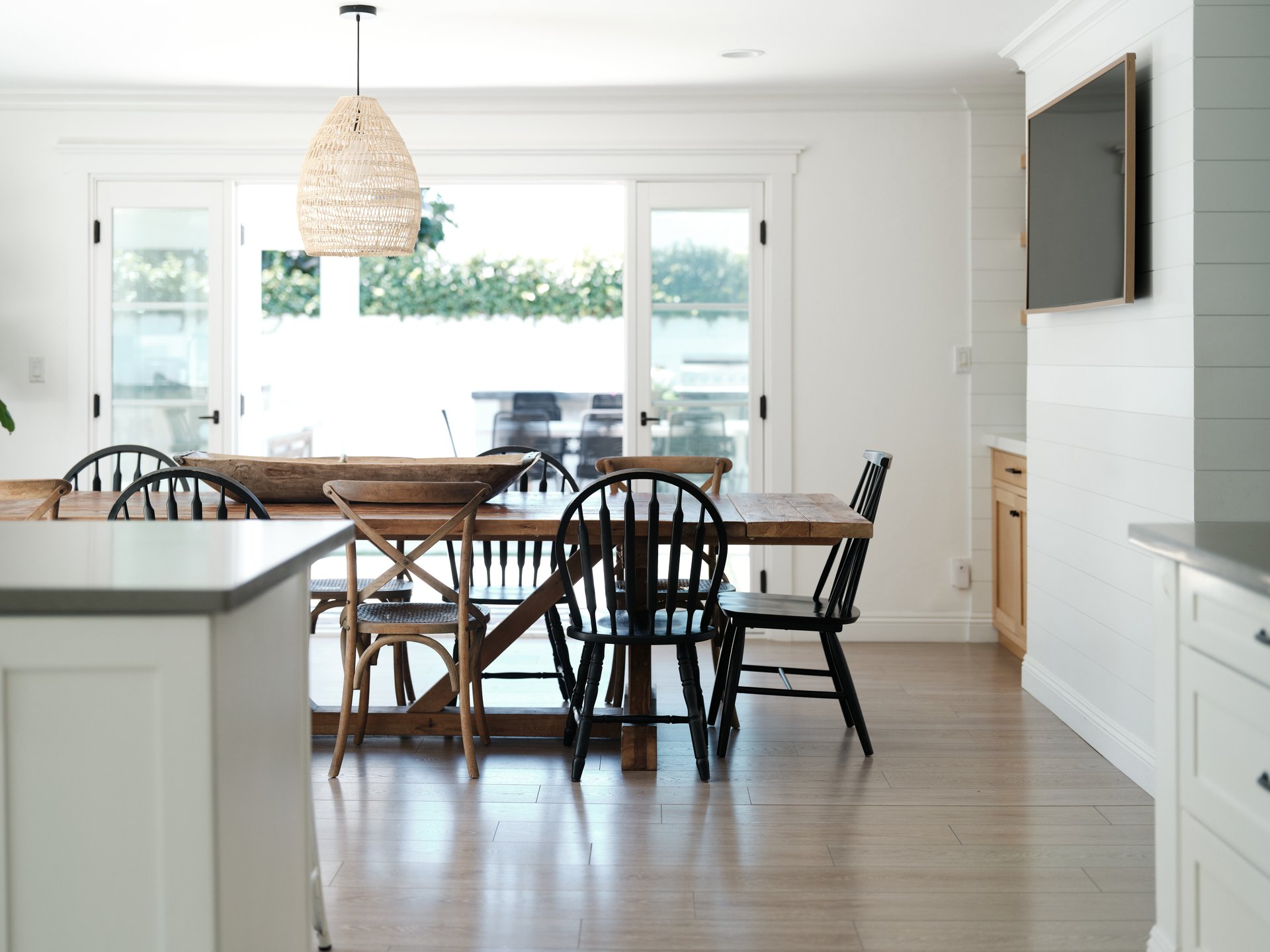
This is the kind of open, light-filled kitchen that keeps showing up on relocating families' must-have lists. Anaheim Hills has plenty of them.
Peralta Hills
One of the original hillside enclaves, Peralta Hills sits on the western edge of Anaheim Hills with larger lots, mature landscaping, and a more established feel than newer developments. Homes typically date from the 1970s through 1990s, with a strong remodel and rebuild trend in recent years. Price range generally $1.2 million to $2.5 million depending on lot size, view, and condition. Strong access to Canyon High School and Running Springs Elementary. If you value privacy, mature trees, and an established neighborhood character, Peralta Hills is often the right fit. I cover this area in detail in my piece on Peralta Hills as one of Orange County's most underrated neighborhoods.
Belsomet, Summit Pointe, and Hidden Canyon (the guard-gated tier)
These are the three guard-gated luxury communities in Anaheim Hills. Belsomet (custom estates, larger lots, $2 million to $5 million-plus), Summit Pointe (well-maintained semi-custom, $1.5 million to $3 million), and Hidden Canyon (mid-size guard-gated, $1.5 million to $2.5 million) each have their own personality. All three carry higher HOA dues, dedicated security, and selective resale dynamics. Best-fit families value privacy, strong HOA management, and a more curated neighborhood experience.
Almeria and Copa De Oro
Mid-tier hillside neighborhoods with strong school feeders and a slightly more accessible price point ($1.2 million to $2 million for the most part). The streets curve through the hillside, lots are typically 7,000 to 12,000 square feet, and homes are mostly 1980s through 2000s build. Walk-to-school access for many addresses is a major draw for young families.
Canyon Terrace, East Hills, and Canyon Heights
The eastern Anaheim Hills neighborhoods bordering the Cleveland National Forest. Slightly more affordable on the entry end ($1 million to $1.5 million for most family homes), with stronger trail access and more dramatic hillside topography. Some properties sit in higher fire-risk overlays, so insurance underwriting matters here.
The Summit and Oak Canyon
Newer-construction master-planned communities at the higher elevation. The Summit features larger custom and semi-custom homes ($1.8 million to $3 million-plus). Oak Canyon and the immediate surrounding tracts offer a mix of mid-tier and larger homes with strong views and modern build quality.
Mohler Loop
One of the more exclusive enclaves, with larger lots and a more rural-equestrian feel. Pricing often runs $2 million to $5 million-plus depending on acreage and home size. Best-fit families want a more spread-out lot and don't mind being slightly farther from the central Anaheim Hills shopping and services.
If you are weighing Anaheim Hills against the alternative of moving to Yorba Linda instead, my comparison of Anaheim Hills vs Yorba Linda is the natural companion to this guide.
Schools Beyond Canyon High
Most relocating families anchor their school research on Canyon High, but the elementary and middle school feeders matter just as much for younger families. The Orange Unified School District serves the majority of Anaheim Hills, with most schools rated highly on GreatSchools and Niche. Running Springs Elementary, Canyon Rim Elementary, Imperial Elementary, and Crescent Elementary all serve Anaheim Hills neighborhoods, with the specific feeder pattern varying by address. El Rancho Charter Middle School and Cerro Villa Middle School are the typical middle school feeders into Canyon High.
For families landing on the eastern edge of Anaheim Hills, the small pocket served by PYLUSD (Placentia-Yorba Linda Unified School District) offers access to a different set of schools, with Yorba Linda High School as the eventual high school assignment for some addresses. Always verify school assignments by specific address through both the OUSD and PYLUSD school boundary tools rather than assuming based on general neighborhood.
Private school options include St. John's Lutheran (Pre-K through 8th grade in Orange), several Catholic schools in the broader area, and specialty programs in Yorba Linda and Anaheim. Many Anaheim Hills families also commute to private high schools in north Orange County (Servite, Mater Dei, Rosary Academy, Cornelia Connelly).
Commute Reality: What You Need to Know Before You Move
Anaheim Hills is car-dependent. Even the most walkable pocket (Anaheim Hills Town Center) reaches only a 25 walk score. Plan your relocation around the assumption that every adult in the household needs a reliable vehicle and that most daily activities involve a five to fifteen minute drive.
Freeway access
Three primary freeways serve Anaheim Hills. The 91 Freeway runs east-west along the southern edge of the community, providing connections to the 5 Freeway, the Inland Empire, and Riverside County via toll lanes. The 241 Toll Road provides north-south connections to Irvine and the broader Orange County toll system. The 55 Freeway is a few miles southwest, providing additional access to Newport Beach and the central Orange County corridor. The 57 Freeway is also nearby, providing connections to the San Gabriel Valley.
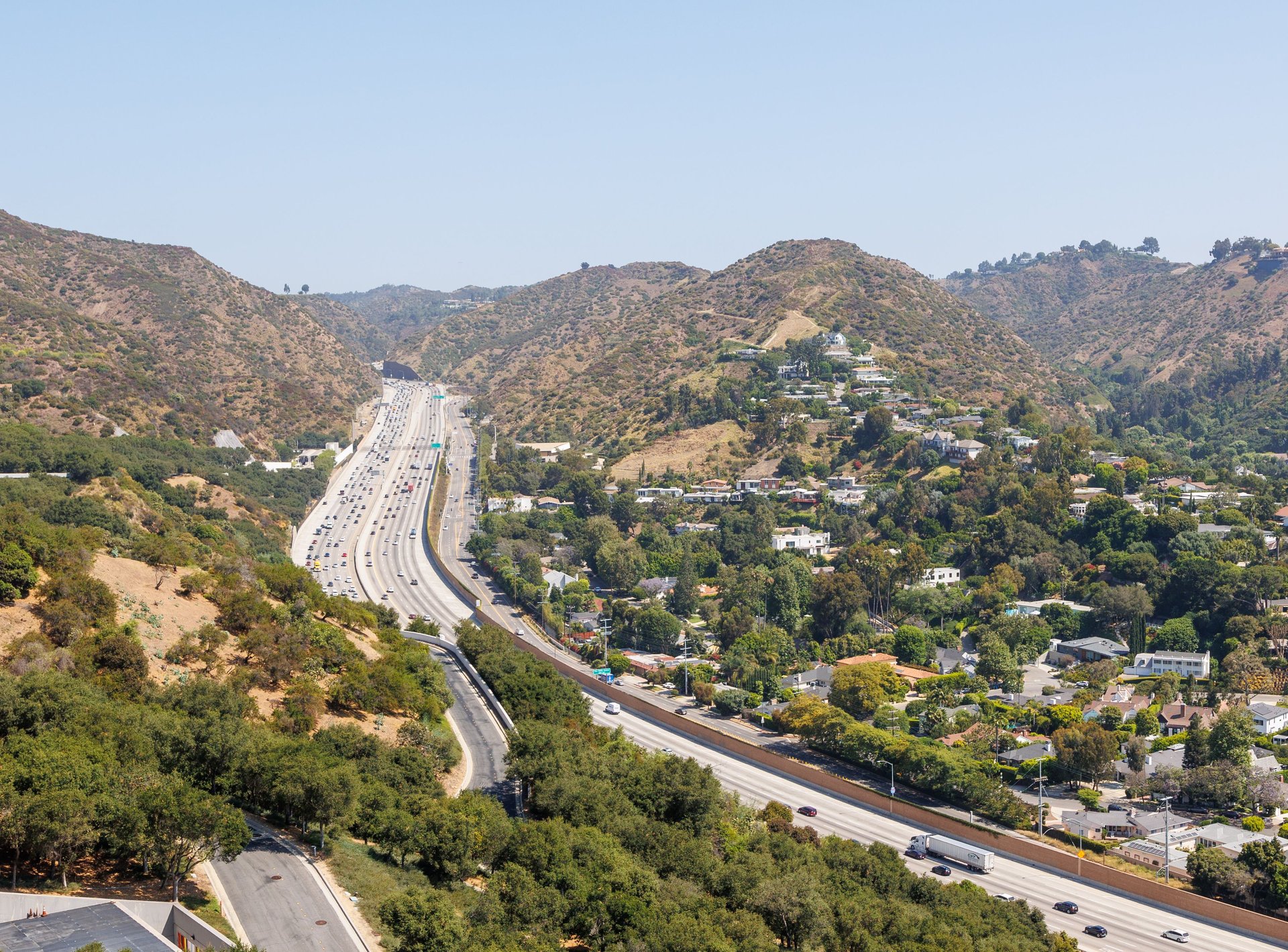
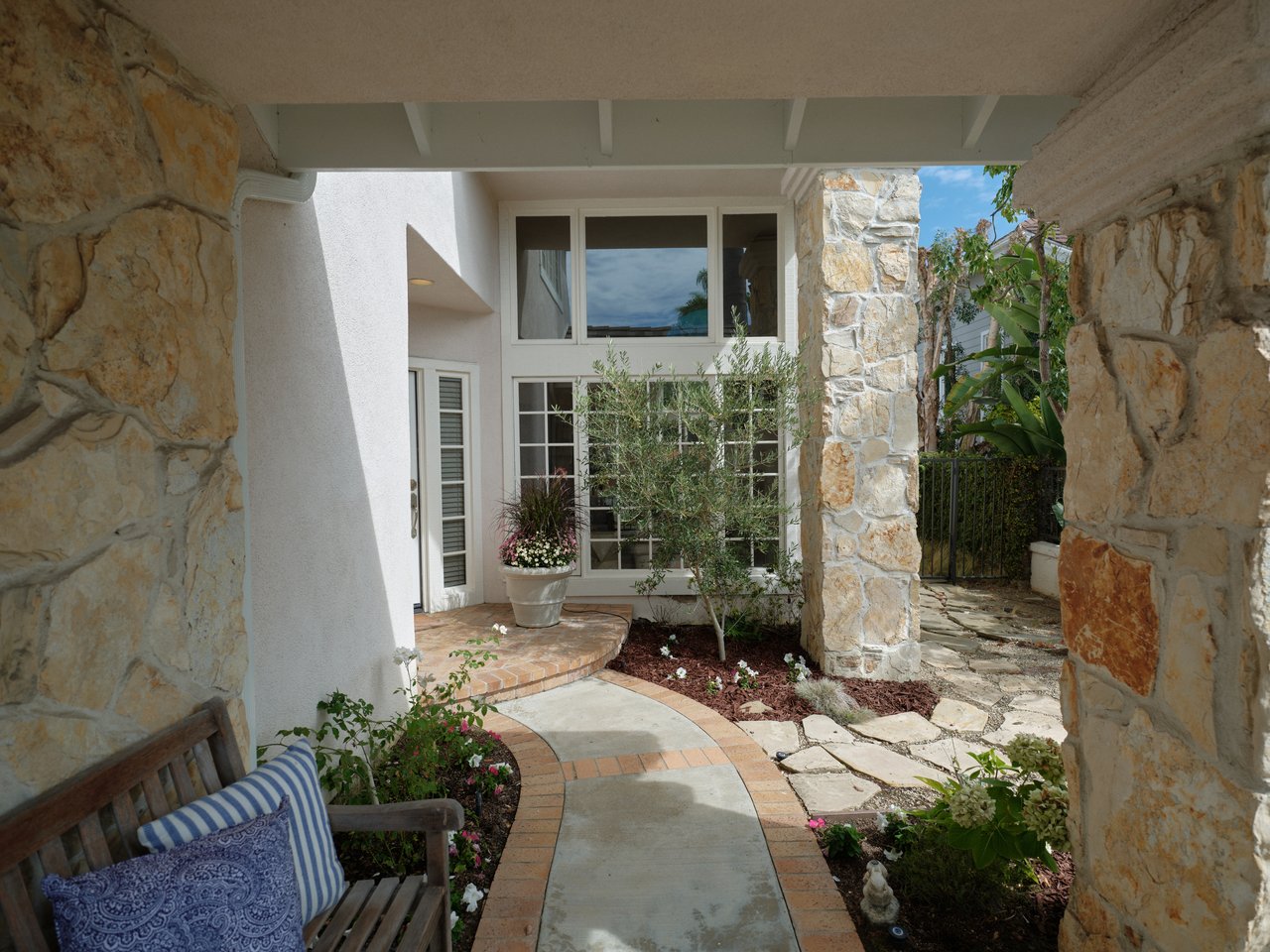
Freeway access is one of the first questions relocating families ask. Brian Kidd walks through the honest commute math for Irvine, LA, and beyond before you commit to a neighborhood.
Typical commute times
To Irvine business parks: 25 to 40 minutes (depending on time of day and freeway choice). To downtown Los Angeles: 50 to 90 minutes via the 91 to 5, longer in peak. To Newport Beach: 35 to 50 minutes. To John Wayne Airport: 30 to 40 minutes. To the Inland Empire (Riverside, Corona, Eastvale): 30 to 50 minutes via the 91. To LAX: 60 to 100 minutes depending on traffic. Remote workers and hybrid workers benefit most from Anaheim Hills' location; full-time commuters to LA face the tougher math.
Public transit
Public transit in Anaheim Hills is limited. OCTA bus routes serve parts of the community but are not a practical primary commute option for most working professionals. The Anaheim Canyon Metrolink station (in nearby Anaheim) offers commuter rail access to Los Angeles for those willing to drive to the station. Most relocating families should plan around vehicle-based transportation as the primary mobility model.
Local driving
Within Anaheim Hills, daily driving is generally pleasant. Santa Ana Canyon Road and Imperial Highway are the main east-west arteries. Weir Canyon Road and Anaheim Hills Road are the main north-south. Traffic moves well off-peak. Peak hours (7 to 9 a.m., 4 to 6 p.m.) bring congestion at the major freeway on-ramps and along Santa Ana Canyon Road.
The Financing Math: What You Need to Know Before You Shop
Here is where my mortgage lender background becomes useful. Most relocating buyers underestimate how much income is required to qualify for an Anaheim Hills purchase under current financing conditions, and the surprise can derail an otherwise well-planned move. Let me walk through the actual numbers.
The baseline qualification math
With the 30-year fixed mortgage averaging 6.37 percent in May 2026 per Freddie Mac, the math on a typical Anaheim Hills purchase looks like this. On a $1.3 million home with 20 percent down ($260,000), the loan amount is $1.04 million. Principal and interest at 6.37 percent over 30 years is approximately $6,490 per month. Property taxes at 1.15 percent annually add $1,246 per month. Standard homeowner's insurance adds $300 per month (more for higher-risk properties). HOA dues add $150 to $400 per month depending on the community. The total monthly carrying cost on a $1.3 million Anaheim Hills home typically lands between $8,200 and $9,000.
To qualify for that payment under conventional debt-to-income guidelines, household income typically needs to be at least $250,000 to $275,000, depending on other debts and the lender's specific underwriting standards. For homes in the $1.6 million to $2 million range, qualifying income climbs to $300,000 to $400,000-plus.
Down payment realities
Twenty percent down is the standard assumption, but it is not the only path. Conventional loans allow down payments as low as 3 percent for first-time buyers (subject to private mortgage insurance). Jumbo loans (which most Anaheim Hills purchases above approximately $806,500 in OC will require) typically need 10 to 20 percent down with strong reserves. VA loans for eligible veterans allow zero down with no PMI. FHA loans are less common in this price range due to county loan limits but can work for some entry-level Anaheim Hills purchases.
Pre-approval before you fly out
For relocating buyers, the most important first step is getting pre-approved with a lender who understands the local market and can structure your financing for a competitive offer. Out-of-state buyers especially benefit from having a complete pre-approval package and an experienced local lender who can vouch for the strength of the financing during the offer negotiation. As a licensed broker and mortgage lender, I run this conversation directly with relocating buyers, which avoids the back-and-forth of working with an out-of-state lender unfamiliar with California-specific deal mechanics.
Cost-of-Living Comparison: Anaheim Hills vs Common Origin Markets
The honest cost comparison is what most relocating families want before they commit. Below is how Anaheim Hills compares on the housing side against the most common origin markets I see for relocations into the area.
Median home price comparison: Anaheim Hills 2026 vs common relocation origin markets
The honest reality for out-of-state relocating buyers is that California pricing is what it is. Families coming from Texas, Arizona, or the Pacific Northwest will pay roughly twice as much per square foot for a comparable home. The trade-off is climate, schools, and proximity to coastal Southern California amenities. Whether that trade-off makes sense depends on income, lifestyle priorities, and how much the rest of the family needs to be persuaded.
Practical Relocation Logistics
Once you have decided Anaheim Hills is the right destination, the logistics deserve a real plan. Here is the rhythm I typically run with relocating clients.
Sixty to ninety days out
Get pre-approved with a local lender. Have an honest budget conversation with your spouse or partner. Begin reviewing Anaheim Hills MLS listings in your price range to calibrate expectations. Identify which schools the family needs to be zoned into. Plan an in-person scouting trip if possible (most relocating families benefit enormously from one weekend on the ground).
Thirty to sixty days out
Engage a buyer's agent (ideally one who can also handle financing or work tightly with your lender). Tour properties in person if possible, virtually if not. Begin connecting with a moving company. Research healthcare providers, vet new schools through the OUSD or PYLUSD enrollment process, and confirm utility transfers.
Thirty days out
Finalize purchase contract and open escrow. Schedule home inspection, appraisal, and final walkthrough. Coordinate moving logistics, change of address, DMV requirements (California requires you to obtain a CA driver's license within 10 days of establishing residency), voter registration, and school enrollment paperwork.
Day of arrival and beyond
Update your address with banks, employers, the IRS, and credit cards. Register vehicles with the California DMV (within 20 days of establishing residency). Enroll children in school. Sign up for Anaheim Public Utilities and SoCalGas accounts. Explore the immediate neighborhood, identify your nearest grocery store, gas station, urgent care, and school drop-off route. Within the first month, attend a community event or HOA meeting to start building neighborhood connections.

Finding a home with the right space for your family starts with the right guidance. Start your Anaheim Hills search with Brian Kidd: (714) 404-8152.
The Hidden Considerations Most Relocation Guides Skip
Wildfire risk and insurance
Anaheim Hills sits adjacent to the Cleveland National Forest, and parts of the community fall within California's State Responsibility Area (SRA) or Very High Fire Hazard Severity Zones. Properties in these overlays face higher insurance premiums, more limited carrier availability, and additional disclosure requirements at sale. For relocating buyers, especially those used to lower-risk insurance markets, this is one of the most important due-diligence items. Always pull the wildfire overlay map for any property under serious consideration before you write an offer.
Air quality and microclimate
Anaheim Hills sits in the Santa Ana Canyon air corridor, which during certain weather patterns can experience elevated particulate levels from inland and downwind activity. Summer temperatures run noticeably warmer than coastal Orange County (often 8 to 15 degrees warmer than Newport Beach on hot summer afternoons). The Santa Ana wind events in fall can be intense, particularly for the eastern hillside neighborhoods.
HOA documents matter
If you are buying in an HOA neighborhood (most of Anaheim Hills outside the older Peralta Hills sections), read the CC&Rs, financials, and reserve study before close of escrow. The CC&Rs govern what you can and cannot do with the property (paint colors, landscaping, parking, ADUs, short-term rentals). The financials and reserve study tell you whether the HOA is well-funded or facing future special assessments. This is a 30-minute reading exercise that has saved my buyers from very real mistakes.
Probate, trust, and inherited property considerations
If you are relocating because you have inherited an Anaheim Hills home (or you are managing an estate that includes one), the considerations are different. The home likely needs updating, the family is making decisions remotely, and the timeline pressures are different from a standard purchase. I have walked many families through inherited property transactions in this area, and the right path often depends on whether you intend to live in the home, rent it, or sell. The honest conversation about that decision is one I am happy to have without a sales pitch attached.
What Makes Anaheim Hills Different from Other OC Suburbs
Relocating buyers often ask me to compare Anaheim Hills to Irvine, Yorba Linda, Mission Viejo, or other suburban Orange County options. The honest comparison is this. Irvine offers planned-community polish, top-tier schools, and significant new construction at higher price points. Yorba Linda offers larger lots, slightly more rural-equestrian character, and a slightly higher price point for similar quality. Mission Viejo offers South County amenities and lake-community character at a similar price point. Villa Park offers exclusivity and very small-town character at a meaningfully higher price point.
Anaheim Hills sits in a sweet spot that combines real hillside character, top-tier schools, central Orange County location, and accessible-luxury pricing. It is not the most prestigious Orange County address, but it is one of the most balanced for a family that wants schools, safety, space, and proximity to multiple job centers without paying Newport Beach or Villa Park prices. The other piece I tell every relocating family is that Anaheim Hills retains a more grounded, less flashy character than some of the newer master-planned communities. Families here tend to stay for decades, kids grow up here and come back, and the community has a multi-generational depth that newer suburbs cannot manufacture.
Frequently Asked Questions
Is Anaheim Hills a good place to live?
Anaheim Hills is widely considered one of the best places to live in Orange County for families, with a Niche A safety grade, top-rated public schools anchored by Canyon High School (GreatSchools 10/10), median household income of $133,241, and median single-family home prices near $1.275 million as of February 2026. The community offers strong outdoor access, central OC location, and relatively low crime rates for families willing to invest in the housing.
How much do you need to make to live in Anaheim Hills?
To purchase a median-priced single-family home in Anaheim Hills (approximately $1.275 to $1.3 million) with 20 percent down at current 2026 mortgage rates near 6.37 percent, household income typically needs to be at least $250,000 to $275,000 under conventional debt-to-income guidelines. For homes in the $1.6 million to $2 million range, qualifying income climbs to $300,000 to $400,000. Renters can find apartments in the $2,500 to $3,500 monthly range for one and two-bedroom units.
What school district is Anaheim Hills in?
Most of Anaheim Hills is served by the Orange Unified School District (OUSD), with a small eastern pocket served by the Placentia-Yorba Linda Unified School District (PYLUSD). Canyon High School is the primary public high school for OUSD-zoned addresses, holding a GreatSchools rating of 10 out of 10 and ranking #290 statewide in California. School assignments vary by specific address and should be verified through district boundary tools.
Is Anaheim Hills safe?
Anaheim Hills has a Niche A safety grade and a crime index of 51, which is 49 percent below the national average. It is safer than 75 percent of neighborhoods in the City of Anaheim, with crime rates roughly 39 percent lower than the Anaheim citywide average. Standard urban awareness applies, but the area is widely considered one of the safer communities in Orange County.
What is the commute like from Anaheim Hills to Irvine and LA?
The commute from Anaheim Hills to Irvine business parks typically runs 25 to 40 minutes depending on time of day and freeway choice (91, 241, or 55). To downtown Los Angeles, expect 50 to 90 minutes during peak hours via the 91 to 5. To Newport Beach, 35 to 50 minutes. To John Wayne Airport, 30 to 40 minutes. The community is car-dependent, with limited public transit options.
What are the best neighborhoods in Anaheim Hills for families?
Top family-friendly neighborhoods include Peralta Hills (established, mature, $1.2M to $2.5M), Almeria and Copa De Oro (mid-tier, walk-to-school access for many addresses), Canyon Heights and Canyon Terrace (eastern hillside, slightly more accessible pricing), and Summit Pointe and Hidden Canyon (guard-gated luxury). The right fit depends on budget, school priorities, and lifestyle preferences. My deeper guide to Anaheim Hills family-friendly neighborhoods covers each in detail.
How is the weather in Anaheim Hills?
Anaheim Hills has a Mediterranean climate, with warm dry summers (typically 80 to 95+ degrees July through September) and mild wet winters (typically 50 to 70 degrees December through February). Summer temperatures run noticeably warmer than coastal Orange County, often 8 to 15 degrees warmer than Newport Beach on hot afternoons. Fall Santa Ana wind events can be intense, especially in eastern hillside neighborhoods.
Can I find a home in Anaheim Hills under $1 million?
Yes, but inventory is limited. Condos and townhomes start in the low $700,000s. Smaller older single-family homes (typically 2 to 3 bedrooms, 1,200 to 1,800 square feet) occasionally list in the $850,000 to $1 million range, particularly in older Peralta Hills sections and some pockets near the eastern edge. Most family-sized single-family homes (3+ bedrooms, 2,000+ square feet) list at $1.1 million and above in the current market.
Ready to Make the Move to Anaheim Hills
Relocating into Anaheim Hills is one of the better moves a family can make in north Orange County in 2026, but it works best when the financing, the school search, and the neighborhood selection are aligned from day one. I have helped families relocate here from LA, the Inland Empire, the Bay Area, Texas, Arizona, the Pacific Northwest, and well beyond. The right starting point is usually a focused conversation about your budget, your timeline, and the specific neighborhoods that fit your family's priorities. From there, we can build a real plan that includes the home search, the financing structure, and the relocation logistics.
I am Brian Kidd, broker and mortgage lender at Canyon Realty (CA DRE# 01901810). Over twenty years selling Orange County real estate. More than forty years living in Yorba Linda, just north of Anaheim Hills. Dual-license expertise that lets me run both the home search and the financing conversation under one roof. I will tell you honestly whether Anaheim Hills is the right fit for your family, what the realistic budget needs to be, and which neighborhoods match your priorities. Reach me at (714) 404-8152, by email at [email protected], or through my contact page. The Canyon Realty office is at 996 S Brianna Way, Anaheim, CA 92808.